
The fastest way to stop commission errors is to link every booking to a payroll line and report commissions as "bonuses and commissions" in Single Touch Payroll, which keeps your pay records aligned with Fair Work requirements and your STP reporting accurate from the first pay run. We built AnimalBooking to make that link easier for pet service businesses to maintain.
TL;DR:
- Calculate commission on the agreed qualifying amount, usually the pretax service price; excluding a $15 product add on from a $120 service at 40% yields $42.
- For split appointments, set shares in writing beforehand, apply rates only to each share, keep tips separate, and record refunds against the original booking ID.
- Report commissions as a separate income type under STP Phase 2, and retain legible pay records, including incentive payments, for seven years.
- Capture booking IDs, staff, service, and price at sale, then reconcile calculated commissions against bookings before each payroll cutoff to catch omissions and retyping errors.
- A spreadsheet can suit a solo groomer with a handful of weekly bookings, but staff, mobile appointments, or multiple locations increase manual matching errors.
Table of Contents
- How to calculate a single booking commission
- Workflows and tools for tracking commissions day to day
- Handling commission disputes and adjustments
- Keeping commission data accurate and consistent
- Protecting staff commission data
- Quick fixes managers can make this pay cycle
- How AnimalBooking links bookings to payroll faster
- FAQ
- Sources
How to calculate a single booking commission
Commission tracking starts with one formula: commission = commission rate × qualifying amount. The qualifying amount is usually the service price before tax and before any product add-ons that are not commissionable, so you need a clear policy on what counts before you run any numbers.
Here is a worked example using a mobile grooming appointment:
- Booking ID GR-1042, service total $120, commission rate 40%.
- Qualifying amount after removing a $15 shampoo upsell that is excluded from commission: $105.
- Commission owed: $105 × 0.40 = $42.
- Net amount paid to the business from that booking after commission: $63.
Splits get more complex when two staff work the same appointment, such as a groomer and a bather. In that case, divide the qualifying amount by each person's agreed share before applying their individual rate, rather than paying both staff a full commission on the same total. Tips are not commissions and should never be blended into the same figure: tips are typically the staff member's in full and do not form part of taxable commission income in the same way. Refunds and cancelled deposits also need handling rules. If a client cancels and the deposit is forfeited, decide in advance whether that forfeited amount is commissionable, and if a service is refunded after a commission has already been paid, record the adjustment against the next pay cycle rather than quietly netting it off.
Pro Tip: Always store the booking ID alongside the commission line in your pay records, not just the staff name and total, so any later audit or dispute can be traced back to the original appointment.
Workflows and tools for tracking commissions day to day
Most pet service businesses start with a spreadsheet, and that can work for a sole groomer with a handful of weekly bookings. The trouble shows up once you add staff, mobile appointments or multiple locations, because manual entry is where commission errors creep in.
A step up is exporting data from an EPOS or point-of-sale system at the end of each pay cycle, which at least gives you a consistent transaction record to reconcile against. A UK-based guide on tip management through EPOS systems offers a useful model for passing through tips and splits accurately, even though the regulatory detail there applies to the UK rather than Australia.
The more reliable option for appointment-based businesses is booking software that supports staff splits natively, so each booking already carries the staff assignment, the service price and the agreed commission rate before payroll even starts. This removes the manual matching step entirely, because the payments feature and staff permissions in a booking platform can generate that audit trail automatically. Whichever workflow you choose, the goal is the same: one source of truth that payroll can pull from without re-keying numbers.

Handling commission disputes and adjustments
Disputes usually fall into a few predictable categories: a disagreement over the qualifying amount, a missed refund adjustment, or confusion over who gets credit for a booking when two staff were involved. The fix for most of these is the same, which is a documented policy that staff can check themselves rather than relying on a manager's memory.

Set a standing rule that any refund, discount or deposit forfeiture must be logged against the original booking ID within a fixed window, such as before the next pay cycle closes. This stops adjustments from surfacing weeks later when nobody remembers the detail. For split bookings, agree the percentage split in writing before the appointment, not after, so there is no retrospective negotiation once the service is complete.
When a dispute does arise, resolve it against the recorded booking data first, not against anyone's recollection. If your pay records already show the booking ID, service total, commission rate and net amount paid, as Fair Work requires you to keep for 7 years, most disagreements resolve in minutes rather than days. A short written resolution guideline, even a single page, that staff sign off on during onboarding removes a surprising amount of friction later.
Keeping commission data accurate and consistent
Accuracy problems in commission tracking almost always trace back to the same handful of causes: late data entry, inconsistent definitions of what counts as the qualifying amount, and manual re-typing between systems. Fixing these is less about better software and more about tighter process.
Capture the booking ID, staff member, service and price at the point of sale, not after the fact, so there is no window for details to be forgotten or guessed. Use one consistent definition of qualifying amount across every staff member and every service type, written down somewhere everyone can check. Run a reconciliation before every payroll cutoff that compares the total commissions calculated against the total bookings taken for that period, rather than trusting the numbers because they look right.
Consistency matters more than sophistication here. A simple spreadsheet used the same way every single pay cycle will outperform a complex system that different staff fill in differently. The goal is a single, repeatable process that produces the same commission figure regardless of who runs the calculation.
Protecting staff commission data
Commission records contain personal and financial information for every staff member, including pay rates, hours and earnings history, so they deserve the same care as any other payroll data. Restrict access to commission and pay records to the people who actually need it, such as the manager running payroll, rather than leaving spreadsheets open to the whole team.
Keep a backup of commission records separate from your day-to-day working file, since a single corrupted spreadsheet should never be the only copy of 7 years of required Fair Work record-keeping. If you use booking or payroll software, check that staff accounts have individual logins rather than a shared password, so any change to a commission rate or booking record can be traced to the person who made it. This is as much about dispute resolution as it is about security: a clear access trail protects both the business and the staff member if a commission calculation is ever questioned.
Quick fixes managers can make this pay cycle
Most commission errors come from three habits: missing booking IDs, unreported refunds and skipping reconciliation before payroll runs. Fix those three first. Capture the booking ID on every commission line, require staff to log refunds the day they happen, and run a short reconciliation the day before payroll closes. Trial this on one staff member or one service line before rolling it out business-wide. Consistent recording cuts disputes and keeps you ready for any audit.
— AnimalBooking
How AnimalBooking links bookings to payroll faster
We built AnimalBooking so every booking already carries the staff assignment, service price and payment status, which means your commission figures come straight from the same record payroll relies on.
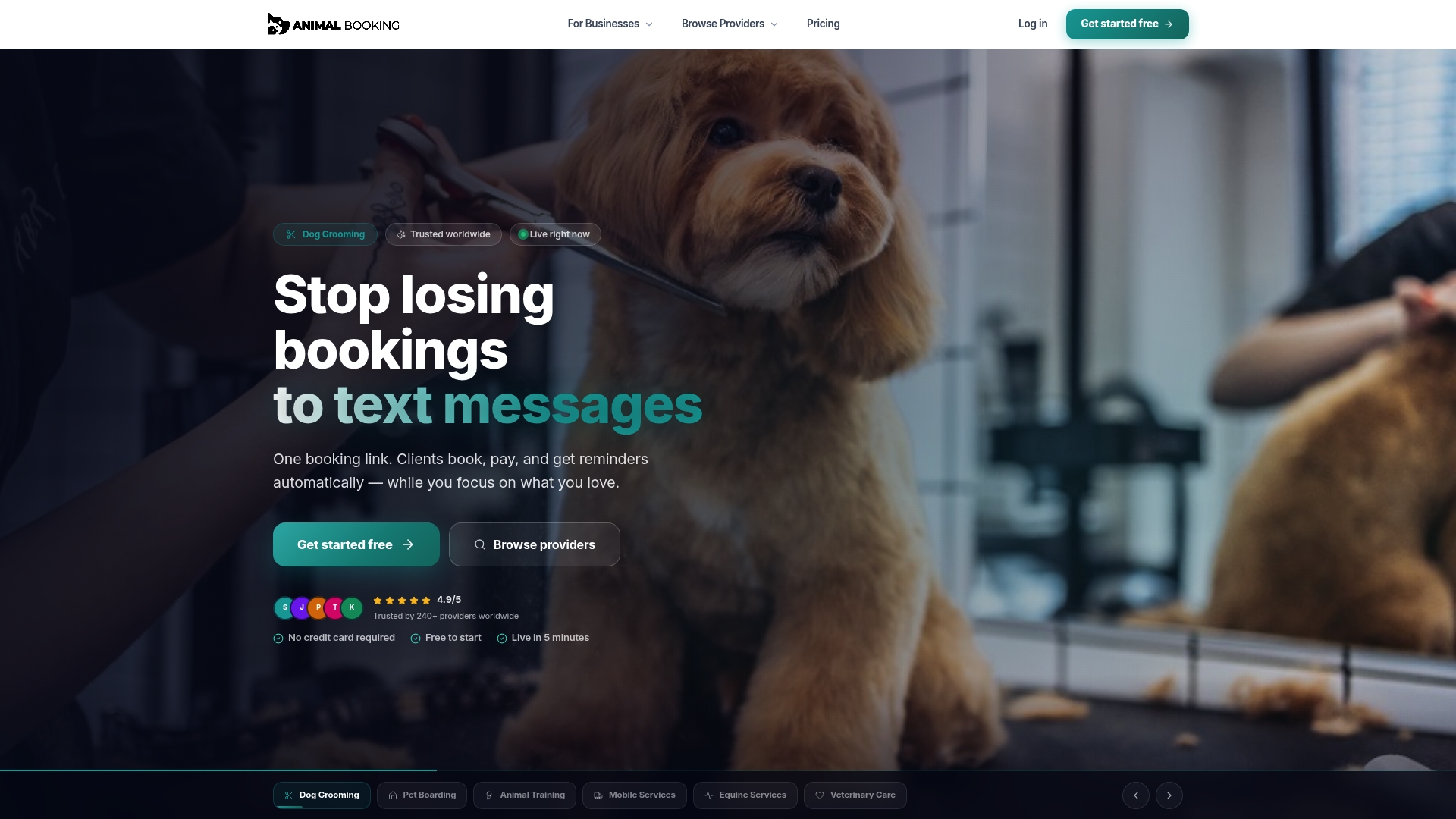
- Staff permissions let you assign each booking to the groomer, trainer or boarder who delivered it.
- Payment capture records the exact amount paid per booking, ready to apply your commission rate against.
- Exportable booking and payment data saves the manual matching that spreadsheets and EPOS exports usually need.
Most providers are live quickly. Check pricing and plans to find the fit for your team size.
FAQ
What counts as the qualifying amount for commission?
The qualifying amount is typically the service price before tax, minus any add-ons or products your business has excluded from commission. Set this definition once, in writing, and apply it the same way across every staff member and booking.
How do I report commissions through Single Touch Payroll?
Commissions are reported as a separate income type under STP Phase 2, disaggregated from regular gross pay. Out-of-cycle commission payments can be reported in a separate pay event or included in the next regular pay run, depending on your payroll solution.
How long do I need to keep commission pay records?
Fair Work requires employers to keep clear, accurate pay records for 7 years, including details of any incentive-based payments, bonuses and commissions. These records must be legible and available if requested.
What should a pay slip show for commission payments?
A compliant pay slip must show the gross and net amounts, any deductions, and details of bonuses, commissions or loadings included in that pay period. Pay slips must be issued within 1 working day of payday under Fair Work rules.
What does AnimalBooking cost for a small grooming team?
Plans start with a free tier and several paid tiers, alongside platform fees varying by plan. Full details are on the pricing page.
Sources
Before finalising your commission tracking process, check the primary rules directly rather than relying on summaries. The Fair Work and ATO pages linked throughout this article set out exactly what records and reports are required, and a payroll provider or accountant can help apply them to more complex commission structures or multi-state staff.
- Record-keeping and pay slips - Fair Work Ombudsman
- Rules of reporting through STP | Australian Taxation Office
- Fair Work Regulations 2009 - reg 3.33 Records--pay (AustLII)