

A website for pet sitters needs to do four things well: accept bookings around the clock from a phone, show real-time availability, process secure payments including deposits, and send automated reminders that cut down on no-shows. A platform like Animal Booking is built to cover each of these from day one, without months of setup.
TL;DR:
- Pet sitting platforms should support real-time availability, secure payments with deposits, and automated reminders to minimize no-shows effectively.
- Most specialized pet booking sites can be set up within 10 to 15 minutes once services, prices, and staff schedules are defined.
- A booking website enhances social media presence by providing clients a direct, easy way to check availability and pay deposits without back-and-forth messaging.
- Data security requires PCI-compliant payment processing and pet records stored with restricted, permission-based access; legal terms must include clear policies and liability disclaimers.
- Successful platforms integrate with calendar apps, accounting tools, and messaging services to streamline operations and ensure smooth, double-booking-free scheduling.
Table of Contents
- Core features checklist for a pet-service booking website
- How to choose the right booking website for your pet business
- Quick setup walkthrough: a minimum viable launch in hours
- Site content and conversion tactics tailored to pet services
- Security and data privacy considerations for pet sitter websites
- Integration with popular pet care platforms and apps
- Legal compliance aspects for pet sitters
- A sitter's view on switching to a booking website
- How Animal Booking meets these needs
- FAQ
Core features checklist for a pet-service booking website
Before you pick or rebuild a booking site, check it against the features that actually move the needle for a pet-service business. A booking page that looks polished but misses the operational basics will cost you more time than it saves.
- Real-time availability and smart calendar tools, including multi-staff views, buffer times between bookings, and limits on how many pets a sitter or facility can take at once.
- A mobile-first booking portal where clients pick a service, add extras like grooming add-ons, and book multiple pets in one pass.
- Secure payment processing, with support for deposits, refunds and a clear view of how any transaction fee applies to each booking.
- Automated reminders, confirmations and two-way messaging that keep clients informed without you sending a single manual text.
- Pet-specific customer records, covering pet profiles, medical notes, vaccination records and full booking history in one place.
- An embeddable booking widget or a hosted booking website you can run on your own domain.
- Reporting, analytics and calendar sync with tools such as Google Calendar or Outlook so nothing double-books.
- Room for integrations, whether that is your existing website builder, an SMS gateway, or accounting software you already use.
Platforms built specifically for pet sitters tend to bundle most of this out of the box, which matters if you are comparing a general-purpose scheduling tool against something purpose-built for animal services.
Pro Tip: Run a test booking as a client would, on a phone, before you commit to any platform. If the flow feels clunky to you, it will feel worse to a pet owner booking between errands.
How to choose the right booking website for your pet business
Picking a platform is less about feature lists and more about matching tools to how you actually work. Start by mapping your business model, whether that is boarding, mobile grooming, in-home sitting or a multi-staff operation, against what each platform actually handles.
- List your non-negotiables first: multi-pet bookings, staff scheduling, deposit collection, or recurring appointments.
- Ask about the payment flow in a demo: how deposits are taken, how refunds are processed, and whether fees are transparent per transaction.
- Test the messaging automation: does it send reminders automatically, or does someone still need to chase clients manually?
- Check data portability: can you export client records and booking history if you ever switch tools?
- Clarify onboarding time and support: some platforms take weeks to configure, others are built to go live in minutes.
Pricing shapes usually fall into one of three patterns: a flat monthly subscription, a per-booking platform fee, or a combination of both. Work out your break-even point before signing up, particularly if your average booking value is low.
Watch for red flags during any trial: no working mobile demo, no automated messaging, vague answers about fees, or a lack of pet-specific fields like vaccination records. A platform that cannot show you a live booking flow on a phone in the first five minutes of a demo usually cannot deliver one either.
Quick setup walkthrough: a minimum viable launch in hours
Getting a working booking site live does not need to be a multi-week project. Most of the delay in traditional setups comes from indecision, not technical complexity.
- Define your services, durations and prices before you touch any software; this is the step most providers underestimate.
- Set staff availability and any intake questions you need clients to answer, such as pet temperament or medical needs.
- Create your services in the platform and set cancellation rules.
- Connect a payments provider so deposits and balances can be collected automatically.
- Enable automated reminders for both confirmations and pre-appointment notices.
- Publish your booking page or embed the widget on your existing site.
Each step typically takes minutes rather than hours once your service list is ready. Animal Booking is built around this kind of fast start, with onboarding designed to get a provider's booking website live in around 10 to 15 minutes once services and availability are entered.
Before you call it done, test the full client journey yourself: book a slot, confirm the email arrives, check the SMS reminder triggers, and open the page on a phone to check nothing is cut off. A short weekly check of your calendar sync and reminder logs catches most issues before a client does.
Pro Tip: Send yourself a test booking with a fake card decline to see exactly what a client sees when a payment fails. It is the fastest way to spot a confusing error message.
Site content and conversion tactics tailored to pet services
A booking site converts better when it removes friction rather than adding information. Pet owners booking a sitter or groomer want to see the price, check availability, and book, in that order.
- Service pages with clear prices, photo galleries of past work, honest FAQs and visible trust badges.
- A short booking form with pre-filled fields for repeat customers and a single, obvious call to action to book.
- Mandatory pet notes fields so sitters arrive with the information they need, rather than discovering it on arrival.
- Automated post-booking prompts that gather missing pet details and ask for a review once a booking is complete.
Reducing manual back-and-forth with automated messaging is one of the clearest ways to cut no-show rates, according to Animal Booking's own data, which points to reminder automation as a direct lever on no-shows. When you link from a social profile or directory listing, send clicks straight to a specific service's booking page rather than a generic homepage; showing immediate availability on that page converts better than making someone hunt for a free slot.
Security and data privacy considerations for pet sitter websites
A pet sitter's booking site holds client payment details, home addresses in some cases, and medical information about pets, so security is not optional. At minimum, look for a platform that processes payments through a secure, PCI-compliant gateway rather than storing card numbers in a spreadsheet or inbox.
Client and pet records, including vaccination history and medical notes, should sit behind authenticated access rather than being accessible to anyone with the booking link. If you ever export client data, keep that file off shared drives and treat it the same way you would a client list on paper, which is to say, carefully.
Ask any platform directly how data is encrypted in transit and at rest, and whether staff accounts have separate logins with permission levels. A business with several sitters or groomers should never have everyone logging in with one shared password; that is one of the most common and avoidable weak points in small service businesses. Clear data handling also builds trust with clients who are, after all, handing over details about their pets and their homes.

Integration with popular pet care platforms and apps
Your booking site rarely operates alone. It usually needs to talk to a calendar app, an accounting tool, and sometimes a messaging platform you already use to keep clients updated.
Calendar sync with Google Calendar or Outlook avoids the double-booking problem that comes from running a paper diary alongside a digital one. If you use SMS or WhatsApp for client updates, check whether reminder templates can be sent through those channels directly rather than needing a manual copy-paste each time; automated reminder tools built into booking platforms typically handle this without extra apps.
Accounting integrations matter once your booking volume grows past a handful of clients a week, since manually reconciling payments against a spreadsheet becomes a weekly chore rather than a quick check. Before choosing a platform, confirm which specific calendar, payment and accounting tools it connects with, rather than assuming broad compatibility.

Legal compliance aspects for pet sitters
A booking website is also a legal document delivery point, whether providers think of it that way or not. At minimum, your site should carry clear terms of service covering cancellation policies, late fees, and what happens if a pet needs emergency veterinary care while in your care.
A liability disclaimer matters particularly for boarding and in-home sitting, where pets are in your custody for extended periods. This typically outlines what you are and are not responsible for, and should be reviewed against your own insurance coverage rather than copied from a generic template found online.
Privacy obligations around how you store and use client and pet data should also be spelled out, especially if your booking platform collects payment information or medical history. None of this replaces proper legal advice for your specific jurisdiction and insurance arrangement, but a booking site without visible terms and a disclaimer is a gap worth closing before you take your first online booking.
A sitter's view on switching to a booking website
Before automating bookings, a typical week for an independent sitter involves texting back and forth to confirm times, chasing deposits, and occasionally double-booking a Saturday by accident. After moving to an automated system, confirmations and reminders happen without a phone being touched, and no-shows become rare rather than routine.
Refunds and multi-pet bookings still need a human eye sometimes, particularly when a client adds a second dog at the last minute. Most providers find the useful customisations are small ones: a tweaked intake question, an extra reminder the day before, rather than anything elaborate.
— AnimalBooking
How Animal Booking meets these needs
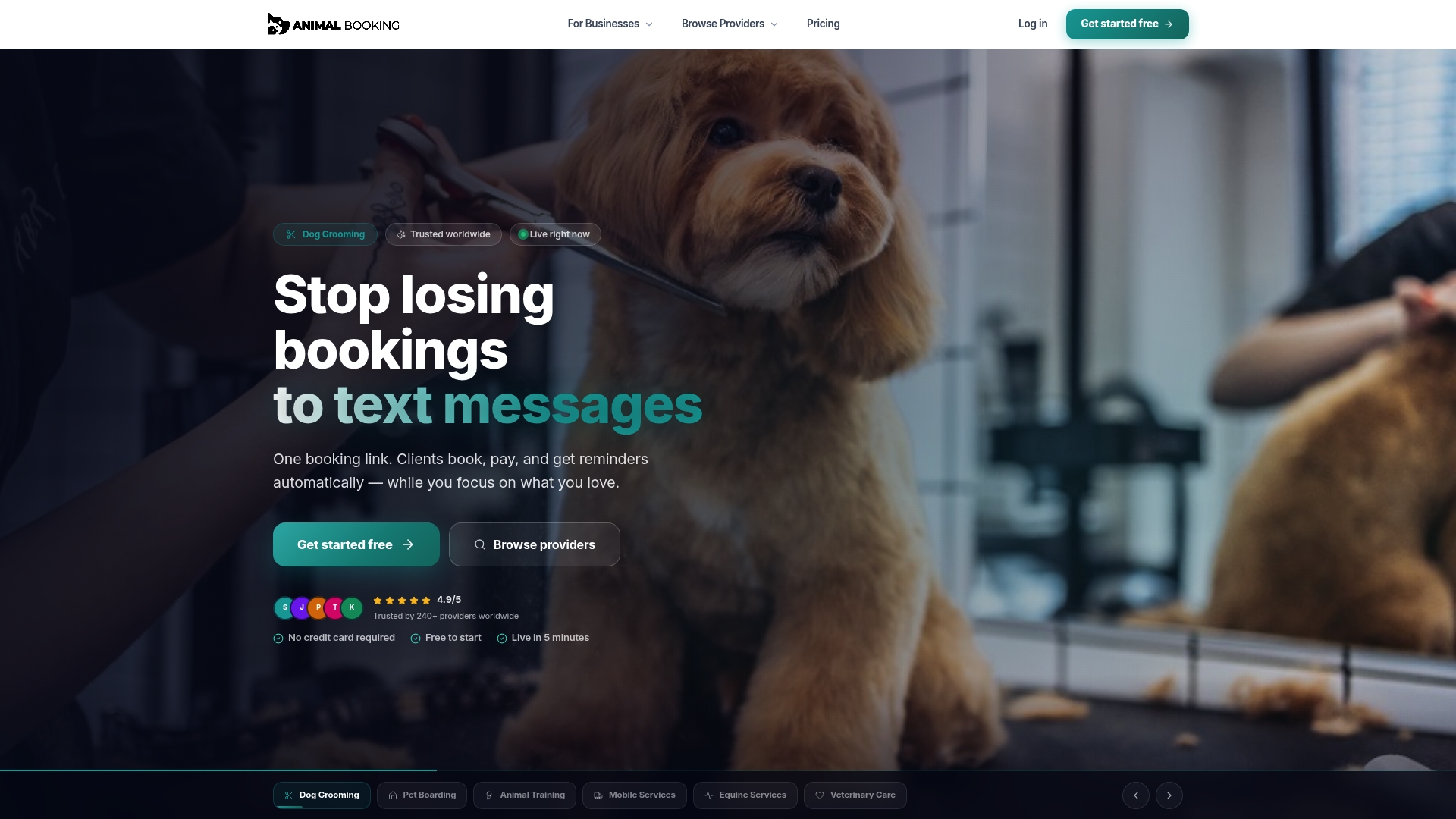
We built Animal Booking around the exact checklist above, because we kept hearing the same frustrations from sitters, groomers and boarders: too many texts, too many no-shows, and no good way to take a deposit without an awkward conversation. Our platform gets a branded booking website live in around 10 to 15 minutes, with automated reminders designed to reduce no-shows and secure payment processing built in from the start.
What you get with us:
- A hosted or embeddable booking page you control, on your own domain.
- Real-time availability, multi-pet booking and staff scheduling in one dashboard.
- Payment processing with deposits, plus platform fees that scale down as you move up our plans, detailed on our pricing page.
- Onboarding built to take minutes, not weeks, documented in our onboarding guide.
Compare our plans and pricing and see which tier fits your booking volume, then get your page live today.
FAQ
What should a website for pet sitters include at minimum?
It should offer 24/7 mobile booking, real-time availability, secure payment processing with deposit support, and automated reminders to cut no-shows. Pet-specific fields, like vaccination records and medical notes, are also expected by most clients booking care for an animal.
How long does it take to set up a booking website for a pet sitting business?
Setup time depends on the platform, but tools built specifically for pet services can go live quickly once your services, prices and availability are defined. Animal Booking, for example, is designed to take around 10 to 15 minutes once that information is ready.
Do pet sitters need a separate booking website if they already use social media?
A booking page gives clients a direct way to check availability and pay a deposit without a back-and-forth message thread, which social media alone cannot do. Linking from a social profile straight to a specific service's booking page tends to convert better than sending clicks to a general homepage.
How much does booking software for pet sitters cost?
Pricing varies by platform and plan, so it is worth comparing subscription tiers against any per-booking fees. Animal Booking lists its plans, including Starter, Independent, Teams and Pro, along with platform fee levels, on its pricing page.
What legal terms should a pet sitting website have?
At minimum, a clear terms of service covering cancellations and emergency care, plus a liability disclaimer outlining what the provider is and is not responsible for while pets are in their care. These should be reviewed against the provider's own insurance rather than copied from a generic template.