
Build one profitable core grooming service, layer predictable add-ons, price from a cost-plus baseline and implement them as discrete services inside your booking software. Get this right and clients see clear choices, your calendar fills without overlap, and deposits with automated reminders push your no-show rate down while lifting average revenue per booking.
TL;DR:
- Core service pricing should be based on full costing, including rent, wages, and equipment, ensuring each appointment is profitable regardless of add-on sales.
- Booking software setup must include separate services for different durations, automated deposit rules, and reminders to reduce no-shows and boost revenue.
- Limiting promotional group deals and accurately forecasting daily capacity helps prevent overbooking and non-compliance with consumer laws.
- Tracking package take rates, rebooking frequency, and client preferences guides package adjustments and marketing efforts effectively.
- Animal Booking's platform simplifies package setup with automatic deposits, reminders, and calendar management, supporting fast, compliant launches.
Table of Contents
- Package types and when to use each one
- How to calculate a price that actually makes money
- Configuring packages inside your booking software
- Capacity planning and compliance checks before launch
- Measuring results and marketing what works
- How Animal Booking supports package pricing and management
- Reading customer preferences to shape your packages
- Where your packages sit against the competition
- Getting staff to explain and upsell packages well
- Practical perspective: launch small, learn fast
- Setting up your packages inside Animal Booking
- Sources
- FAQ
Package types and when to use each one
Most grooming businesses need only four building blocks: a core service, fixed bundles, frequency or subscription packages, and add-ons. Each solves a different problem, and stacking too many at once confuses clients and staff rosters alike.
- Core service: a single, clearly priced groom (bath and tidy, full groom) that must stand on its own financially, regardless of add-on sales.
- Fixed bundles: a set combination, such as bath, nail trim and ear clean, sold at one price for clients who want convenience without decisions.
- Frequency or subscription packages: a set number of visits over a period, suited to clients who groom every four to six weeks and want a locked-in rate.
- Add-ons: optional extras like de-shedding treatments or teeth cleaning, priced separately and attached to any core service.
A mobile groomer usually does best with a tight core service list and simple add-ons, since travel time limits how many variations fit into a day. A salon with several groomers can support bundles and frequency plans because staff can specialise. A combined boarding-and-grooming operation benefits from bundles that pair a stay with a groom, timed to checkout. Whatever the mix, keep the client-facing menu short: three or four core options with a handful of add-ons beats a long list nobody reads properly.
How to calculate a price that actually makes money
Grooming pricing should start from a full accounting of your costs, not a guess based on what the salon down the road charges. Rent, insurance, utilities, booking software fees, laundry, wages, superannuation and equipment all belong in the same annual total before you set a single price, an approach groomer pricing guidance recommends as the starting point for any pricing structure.
- Add up annual costs and desired owner income. Combine every fixed and variable cost with what you need to pay yourself, to get a true operating total.
- Convert that total into required revenue. This is the number your bookings must generate across the year to cover costs and income, not just break even.
- Divide by realistic booked appointments. Use a conservative capacity figure, not a fully booked calendar, since gaps, no-shows and slow weeks are normal.
- Set your baseline price per core service from that per-appointment figure, then round to a tidy number and build simple tiers for coat length or size.
Appointment duration matters as much as the sticker price. If a large double-coated dog takes twice as long as a small short-haired one, the price should reflect that difference or you are effectively subsidising bigger jobs with smaller ones. Build tiering around duration and staff utilisation, not just breed, so your calendar and your price list stay aligned.
Add-ons and frequency discounts should sit on top of a core price that is already profitable alone. According to the same pricing guidance, a well-designed structure lets the business make money on the core service by itself, treating extras as margin boosters rather than something the business depends on to survive.
Pro Tip: Price your core service as if no client ever buys an add-on. Everything else is upside.
Configuring packages inside your booking software
Once your pricing is set, the next job is translating it into fields your booking platform can actually schedule around. Each service needs a name, price, duration, required staff skill, capacity and a note on whether it is a standalone item, an add-on or part of a bundle.
- Create separate services for anything with a different duration or its own billing line, such as a full groom versus a bath-only visit.
- Use modifiers for optional extras that do not change the slot length, like a nail trim added to an existing appointment.
- Set deposit rules by service value: higher-value grooms or new clients warrant a partial deposit or card-on-file, while low-risk repeat bookings may not need one.
- Turn on automated reminders for every package type, since missed appointments cost more the longer the service takes.
Animal Booking states that combining deposits with automated reminders can cut no-shows by up to 80% and lift revenue per booking by around 30%, figures the platform reports from its own usage data rather than independent industry research.
Before going live, run a short testing checklist: create a handful of test bookings across your new services, check the calendar correctly blocks concurrent appointments for the same staff member, and confirm that reminder messages and payment prompts fire at the right time. A deposits versus prepayments comparison is worth reading before you lock in your deposit policy, since the right choice depends on service value and how often a client rebooks.
Capacity planning and compliance checks before launch
A package is only as good as your ability to deliver it. Before advertising anything, forecast realistic daily capacity: slots per groomer, turnaround time between appointments, and spare capacity held back for late add-ons or emergencies.
Consumer law adds a layer most groomers overlook until something goes wrong. The ACCC's guidance for personal services warns that businesses offering group deals or promotions must be able to deliver as advertised, and that deals requiring a minimum number of buyers often trigger non-supply complaints when demand outstrips capacity.
- Cap daily redemptions on any promotional package so a viral post cannot overbook your week.
- Set clear booking terms covering lead times, rescheduling and refunds before a client pays a deposit.
- Soft-launch new packages to a small client segment first, so pricing and staffing gaps surface before a wider rollout.
- Avoid vague availability language in ads. State exactly what is included and for how long the offer runs.
Measuring results and marketing what works
Once packages are live, track a short list of numbers weekly: take rate on each package, average revenue per booking, no-show rate, redemptions per client and how often clients rebook.
- Run a simple A/B test by offering two prices or two reminder cadences to different client segments over a fixed period.
- Let take rate and no-show rate decide the winner, not gut feel, since a slightly lower price that fills more slots often beats a higher one that sits empty.
- Promote with loyalty bundles and frequency discounts rather than deep one-off discounts, since repeat business is cheaper to win than new clients.
- Keep limited-run promos genuinely limited so you never advertise capacity you cannot deliver.
How Animal Booking supports package pricing and management
Animal Booking's feature set maps directly onto the steps above. Setup takes minutes, not days, so a groomer can move from spreadsheet pricing to a live booking page in one sitting.
- Quick setup for creating core services, add-ons and bundles without technical work.
- Deposits and payments built into each service so pricing rules apply automatically at booking time.
- A smart calendar that blocks concurrent slots correctly across multiple staff.
- Auto reminders that fire ahead of every appointment to reduce missed visits.
- Customer CRM that tracks repeat frequency and preferences per client.
This combination can significantly reduce no-shows and increase revenue per booking, according to platform data. A minimal setup looks like this: create the core groom as a service, add nail trims and de-shedding as modifiers, require a deposit on new-client bookings, then switch on reminders for every service type.
Reading customer preferences to shape your packages
Your booking history is the most reliable source of preference data you already own. Look at which core services sell without add-ons, which bundles get abandoned at checkout, and which clients rebook a frequency package versus booking one-off visits every time.
Segment by coat type, size and how often a client returns. A client who books every four weeks is telling you they want a frequency package even if they have never asked for one. A client who always adds de-shedding is a candidate for a bundle that includes it by default at a slightly better combined price than buying separately.
Watch for packages that sell well once and never get repeated. That usually signals the price felt fair for a trial but not for ongoing use, or the bundle included something most clients did not actually want. Cutting a poorly performing bundle is often more valuable than adding a new one, since a shorter menu is easier for clients to choose from and for your team to deliver consistently.
Feedback does not need a formal survey. A quick question at checkout, "was there anything you'd want added or dropped from this package," collected over a few weeks gives a usable pattern without extra admin.

Where your packages sit against the competition
Grooming packages compete on convenience and price clarity more than on any single service being unique. Most local competitors offer a similar spread: a basic bath package, a full groom, and a handful of add-ons, so differentiation tends to come from how clearly the pricing is presented and how easy booking is.
Check what nearby groomers and mobile services list publicly, not to copy their prices directly, but to see where your baseline sits relative to the local market. If your core service price sits well above competitors with no obvious difference in inclusions, expect resistance. If it sits well below, you may be underpricing based on the cost-plus method above rather than matching the market.
Bundles and frequency plans are a common gap. Many smaller operators sell only single visits, which gives a business offering subscription-style packages a genuine point of difference for clients who want predictability. Marketing partners who specialise in service-business visibility, such as veterinary and pet service SEO providers, can help surface that difference to local searchers rather than competing purely on price.
Getting staff to explain and upsell packages well
Staff who understand why a package is priced the way it is sell it more naturally than staff reciting a script. Walk your team through the cost-plus logic behind the core price, so they can explain confidently why a full groom costs more than a bath without sounding defensive.
Train on a simple sequence: confirm what the client's pet needs, mention the core service that fits, then offer one relevant add-on based on coat condition or the client's history, never a blanket upsell list. A client with a matted double coat is a natural fit for a de-shedding add-on mention; a client with a short-haired dog usually is not.

Role-play the most common objections, particularly price comparisons to a previous groomer or a competitor's advertised deal. Staff should be able to point to what is included, not just defend the number.
Review actual upsell rates per staff member monthly using your booking software's reporting. This surfaces who needs coaching and who has found an approach worth sharing with the rest of the team.
Practical perspective: launch small, learn fast
Soft launches limit financial and compliance exposure. Capping a new package to a small client group for four to eight weeks lets you catch pricing errors, staffing gaps or misleading wording before the ACCC's non-supply concerns become a real complaint. Watch take rate and no-show rate closely in that window, then adjust price or limits before opening the package wider.
— AnimalBooking
Setting up your packages inside Animal Booking
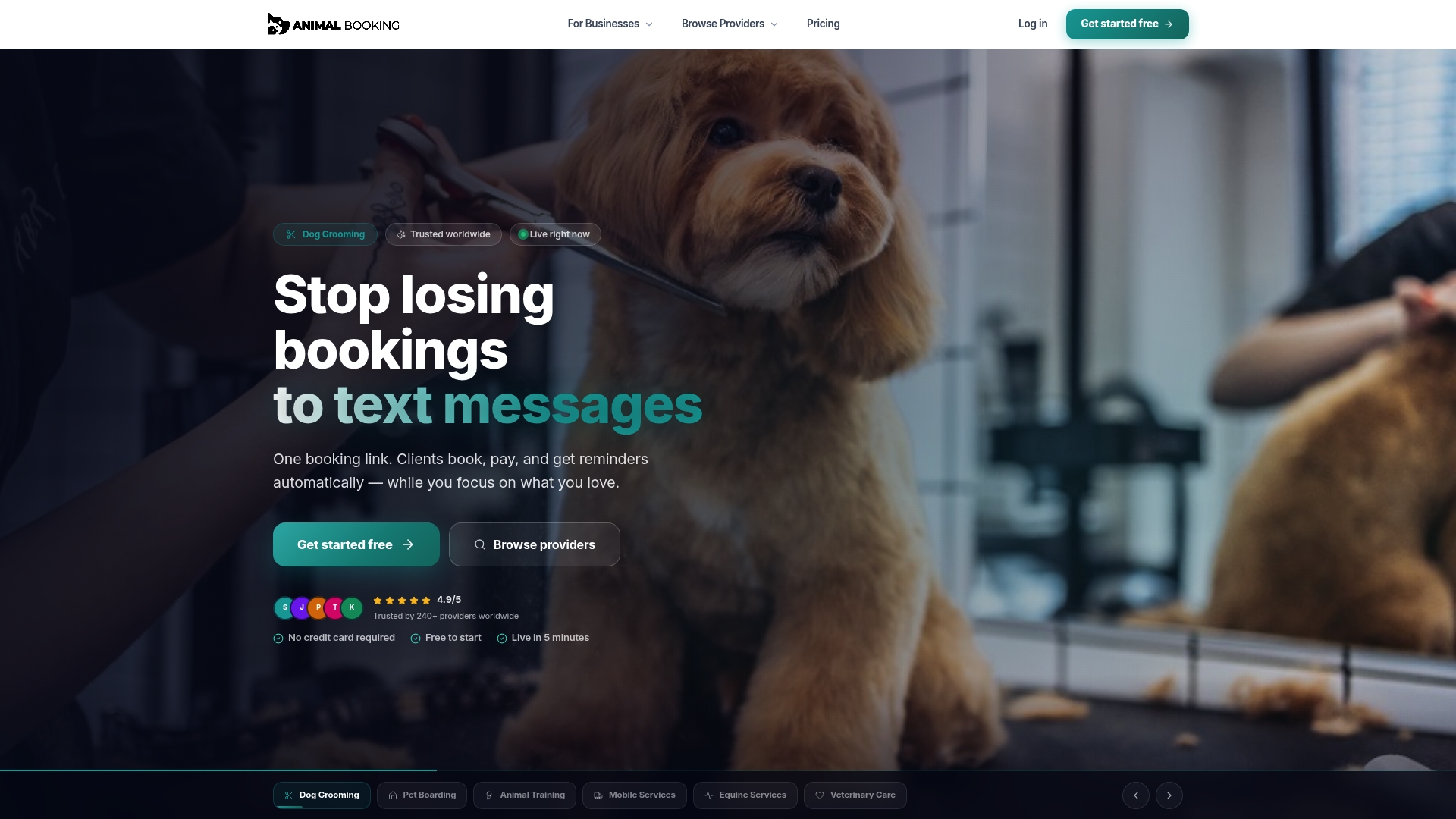
Building the packages above by hand across spreadsheets, texts and a paper calendar is where most of the pricing logic falls apart in practice. Animal Booking turns each core service, add-on and bundle into a bookable item with its own duration, deposit rule and reminder schedule, set up in minutes rather than days.
- Quick setup gets a full package menu live without technical help.
- Deposits and card-on-file options apply your chosen policy automatically at checkout.
- Auto reminders run on every booking type without extra admin.
| Plan | Monthly price | Platform fee |
|---|---|---|
| Starter | Price available on request | 3% |
| Independent | $49 | 2% |
| Teams | $149 | 1.5% |
| Pro | $299 | 1% |
Compare plan details on the Animal Booking pricing page and start building your first package today.
Sources
- Personal services - an industry guide to the Australian Consumer Law
- Creating a cat grooming pricing structure
FAQ
What is the best way to structure grooming service packages?
Start with one profitable core service, then add fixed bundles, frequency packages and optional add-ons on top. Keep the client-facing menu to three or four core choices so decisions stay simple for both clients and staff.
How do I price a grooming package so it stays profitable?
Add up your annual costs and desired income, convert that into required revenue, then divide by a realistic number of booked appointments to set your baseline price, a method detailed in groomer pricing guidance. Add-ons and discounts should sit on top of a core price that already covers your costs alone.
Do deposits and reminders actually reduce no-shows?
Animal Booking reports that combining deposits with automated reminders can reduce no-shows by up to 80% and lift revenue per booking by around 30%, based on its own platform data. Deposit size should scale with service value and how likely a client is to cancel late.
What are the legal risks of running a limited-time grooming deal?
The ACCC's guidance for personal services warns that group deals and heavily promoted offers can lead to non-supply complaints if a business cannot deliver as advertised. Capping daily redemptions and stating clear terms upfront reduces that risk.
How much does Animal Booking cost for a grooming business?
Animal Booking's plans start with the Starter tier at a price available on request, then Independent at $49 per month, Teams at $149 per month and Pro at $299 per month, each with a different platform fee, according to the Animal Booking pricing page. The right tier depends on booking volume and how many staff need calendar access.