
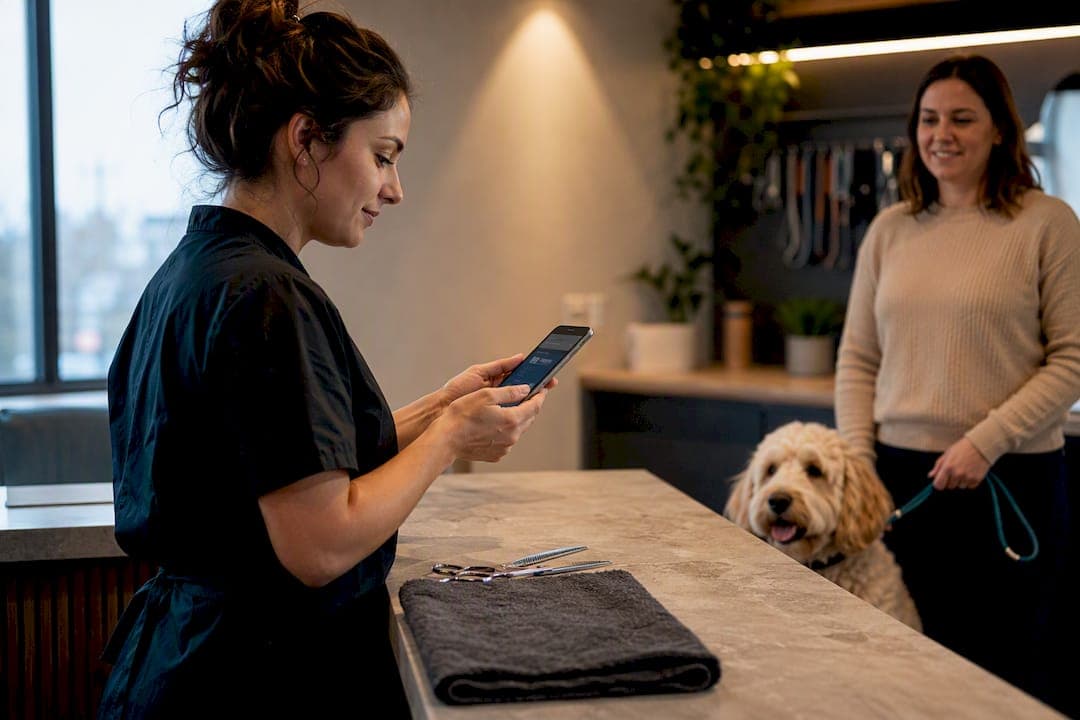
The fastest, lowest-friction loyalty option for a grooming business is a digital wallet-pass stamp card tied to automated booking reminders, not a paper punch-card or a heavyweight branded app. Such a platform sits well as a directly relevant platform for this because it already handles the reminders and booking data the programme depends on. It beats paper because nothing gets left in a car, and it beats a full customer app because nobody has to download anything to earn a free nail trim.
TL;DR:
- Loyalty programs based on digital wallet passes tied to automated booking reminders outperform paper punch cards by reducing lost cards and eliminating manual tracking errors.
- Designing a loyalty milestone that aligns with clients' rebooking frequency, typically every 4 to 8 weeks, improves perceived achievability and engagement.
- Automatic enrolment triggered during appointment completion and personalized reminder timing significantly increase client rebooking rates and loyalty program effectiveness.
- Tracking key metrics such as enrolment rate, booking frequency lift, redemption rate, and basket size during the first 90 days helps optimize reward tiers and messaging strategies.
- Pairing automated booking reminders with modest rewards is more effective than offering large incentives without reminders, especially when timing is tailored to each client's individual grooming rhythm.
Table of Contents
- Wallet passes, paper cards, or a full app: which loyalty program grooming approach wins?
- How do you design a grooming loyalty programme that actually gets used?
- How does validation and enrolment actually run day to day?
- What does the reward economics actually look like?
- Launching your programme: the 90-day rollout checklist
- Why this works: the case for pairing loyalty with booking automation
- The overlooked mistake groomers make with loyalty programmes
- Set up your loyalty workflow without adding admin
- Sources
Wallet passes, paper cards, or a full app: which loyalty program grooming approach wins?
Three broad categories cover almost every grooming loyalty setup on the market: booking-embedded platforms, wallet-pass specialists, and manual paper systems. Each solves the same problem (get clients back in the chair on a predictable cycle) with very different overheads.
Booking-embedded platforms build loyalty tracking into the same system that handles scheduling and payments, so a completed appointment can trigger a stamp automatically. Wallet-pass specialists focus purely on the card itself, using Apple Wallet and Google Wallet so the pass lives on a phone's lock screen without an app download. Paper systems cost nothing to set up but rely entirely on the client remembering to bring the card and the groomer remembering to stamp it.
The trade-offs are straightforward once you see them side by side.
- Booking-embedded platforms: strongest fit if you're already tracking appointments digitally; the loyalty layer rides on data you're collecting anyway.
- Wallet-pass specialists: good if you only want the card and nothing else, though you'll manage stamps and bookings in two separate places.
- Paper punch-cards: zero cost, but no reminders, no data, and cards get lost. FaveCard's approach for pet groomers exists specifically because paper cards leak so much value.
How do you design a grooming loyalty programme that actually gets used?
Match your milestone cadence to how often clients actually book, not to a round number that sounds nice. Most dogs get groomed every 4 to 8 weeks, so a 6 to 8 stamp card lines up with roughly a year of visits, which keeps the reward feeling achievable rather than distant.
- Set the stamp count first. Work backwards from your average rebooking cycle so the first reward lands within two to three months of enrolment.
- Tier your rewards by cost, not just visit count. A cheap add-on like a nail trim or a bandana works well as an early motivator (visit 5 to 8), a discount suits the mid-tier (visit 9 to 12), and a full complimentary groom belongs at the long milestone, 20 visits or beyond, per common vendor cadence guidance for appointment-based grooming.
- Decide stamps vs points before you launch. Simple stamp cards tend to outperform points systems for single-service, repeat-visit salons because they're easier for both staff and clients to track, while points mechanics suit multi-service retailers juggling products alongside services.
- Set one household rule and stick to it. Multi-pet families should earn stamps on one shared account rather than splitting progress across each pet, which keeps their reward pace visible and fair.
Pro Tip: Ask the client to save the wallet pass on their phone right at checkout, while they're still admiring their freshly groomed dog. That moment converts far better than a follow-up email the next day.
How does validation and enrolment actually run day to day?
Enrolment should happen at the point that costs staff the least effort. A QR code at the till, a staff-scan on a phone, or an automatic increment triggered the moment a booking is marked complete all work, and small-business loyalty guides consistently favour staff-assisted validation for appointment-led services because the person at checkout can make enrolment personal rather than transactional.
- Trigger the stamp automatically when a booking is marked "completed" in your scheduling system, removing the chance staff forget.
- Configure a near-reward reminder ("one more visit to your free nail trim") to fire a few days before the next likely booking window.
- Set a separate next-cycle reminder for clients who haven't rebooked within their usual gap.
- Train staff to check the pet's name against the household account before stamping, which catches the most common fraud: someone else's pet riding on a regular's card.
- Cap same-day stamps at one per pet to stop double-scanning during a single visit.
What does the reward economics actually look like?
Run the numbers before you commit to a reward tier.
Benchmark to aim for: enrolment above 40% of active clients within the first quarter, with a measurable lift in rebooking frequency among enrolled clients versus non-enrolled ones, is a realistic early target for a well-run wallet-pass programme.
Track four numbers weekly for the first 90 days: enrolment rate, frequency lift among members, redemption rate, and average basket size. If redemption rate sits near zero after month two, your milestone is probably set too far out.
Launching your programme: the 90-day rollout checklist
- Pre-launch (week 1): lock in your stamp count, reward tiers, and household rule; print signage for the counter and train every staff member on the scan or manual-entry process.
- Launch (weeks 2 to 4): enrol every active client at their next visit, offer a small welcome bonus (a free stamp) for the first 30 sign-ups, and post a short announcement on your social channels.
- First 90 days: review your four KPIs every week, adjust the milestone cadence if redemption is too slow or too fast, and run a targeted winback message to clients sitting one stamp away who haven't rebooked in six weeks.
Why this works: the case for pairing loyalty with booking automation
Booking automation and loyalty tracking solve the same underlying problem from two angles: getting clients back on the calendar without you chasing them.
The features map cleanly onto the workflow above: automated reminders handle the near-reward and next-cycle messages, customer CRM tracks household accounts and visit history for fair multi-pet stamping, and booking-triggered increments remove the manual step of a staff member remembering to scan a card.
The overlooked mistake groomers make with loyalty programmes
Most grooming loyalty advice focuses on the reward, the freebie, the tenth-visit discount. That's the least important part. The programme lives or dies on whether the client remembers it exists between visits, and that's a reminder problem, not a reward problem.
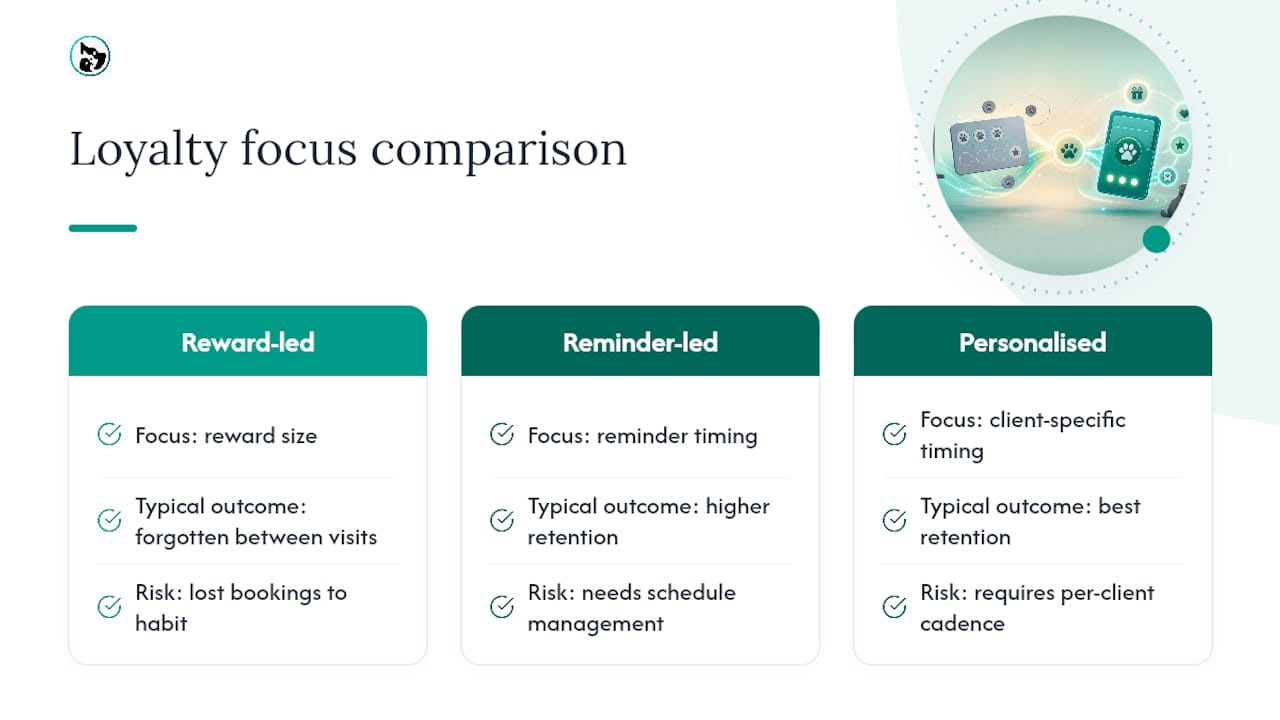
Conventional wisdom says a generous reward drives loyalty. In practice, a modest reward paired with a well-timed reminder outperforms a generous reward with no reminder every time, because the client who forgets they're three stamps away books somewhere else out of habit.
The other blind spot is treating every client the same. A client who books every four weeks and one who books every ten weeks need different reminder timing, not the same generic nudge. If you take one thing from this article, make it that: fix the reminder cadence to match each client's real rhythm before you touch the reward structure at all.
— AnimalBooking
Set up your loyalty workflow without adding admin
You don't need a separate app, a card printer, or a spreadsheet to run this properly. A booking system that already tracks completed bookings and client history can trigger the stamp and fire the reminder, without you touching either.
Start with two things: turn on automated reminders for your near-reward and next-cycle messages, and set up your customer CRM so household accounts track multi-pet visits correctly from day one. If you're not yet taking bookings online, that's the real first step. Set up your online booking page this week, enrol your next ten clients at checkout, and let the reminders do the rebooking work while you focus on the grooming table.