
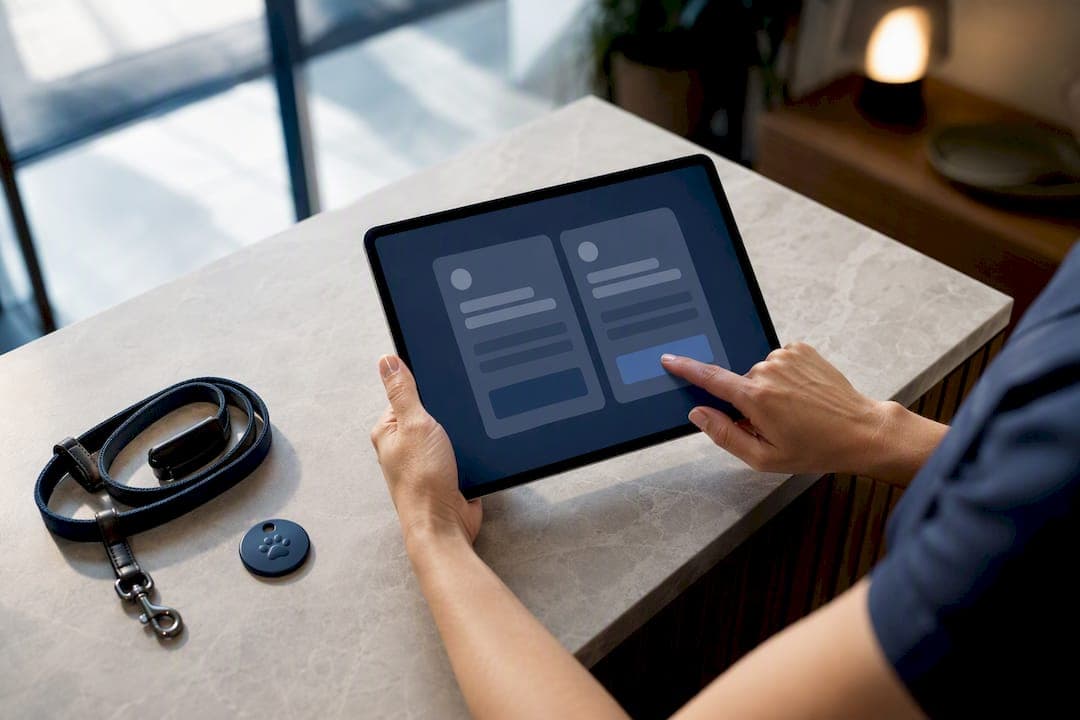
Use a small partial deposit for short, low-value services like a standard groom, and shift to a larger deposit or full prepayment for multi-day boarding, mobile call-outs, or high-value procedures. The deciding factor is enforceability: a clear written policy and a card-on-file arrangement make either method stick, while a vague verbal agreement makes both useless. The steps for setting this up properly follow below.
TL;DR:
- Deposit amounts should match the booking value, with flat fees for short services under $100 and higher percentages for larger or multi-day bookings.
- Cancellation windows should be tailored to service type, typically 24 hours for grooming and 48 to 72 hours for multi-day stays, and clearly communicated at checkout.
- Using online payment links or card-on-file systems reduces processing costs, increases enforceability, and minimizes disputes, especially for large or recurring bookings.
- Automated reminders and explicit policy agreements at booking significantly improve deposit and prepayment enforcement without manual follow-up.
- Business type and booking size determine whether deposits or full prepayments are most effective, with grooming typically preferring small, non-refundable deposits and boarding opting for larger or full payments during peak periods.
Table of Contents
- Deposits vs prepayments: a quick decision checklist for your service
- Set deposit amounts and cancellation rules that protect revenue and customer goodwill
- Payment processing, fees and operational effects of deposits vs prepayments
- How to set up deposits or prepayments in your booking workflow
- What actually works for groomers, boarders and vets
- How Animalbooking handles deposits, card-on-file and automated reminders
- Sources
Deposits vs prepayments: a quick decision checklist for your service
Before picking a number, run each service against five criteria: booking value, booking length, how perishable the slot is (can you refill a cancelled Tuesday 2pm groom?), how much revenue a no-show actually costs you, and whether tips or add-ons usually inflate the final bill.
Short, replaceable slots don't need much security. Multi-day bookings that block your calendar for a week do. That's the whole logic behind the difference between deposits and prepayments. It maps neatly onto default rules by service type:
- Standard grooming appointment (30 to 90 minutes): flat deposit or a small portion of the service price.
- First-time or high-maintenance grooming (dematting, aggressive dogs): moderate deposit, reflecting higher no-show risk and longer chair time.
- Day boarding or single vet consult: flat deposit or moderate percentage, similar to grooming.
- Multi-day boarding or kennel stays: larger deposit, with some operators moving to full prepayment for peak periods.
- Mobile provider call-outs: card-on-file rather than a deposit, since travel time is the real cost at risk, not the service itself.
- Emergency or same-day vet appointments: card-on-file with authorisation, since there's no time to process a deposit before the client walks in.
Two examples make the split practical. A groomer taking a $65 basic wash and trim charges a $15 flat deposit at booking, non-refundable inside 24 hours. A boarding facility taking a seven-night stay at $600 collects a $300 deposit up front and the balance on drop-off, because a cancelled week-long booking is far harder to refill than a cancelled 45-minute slot.
Pro Tip: If you're unsure where to start, default to a flat deposit for anything under an hour and a percentage-based deposit for anything longer. Round numbers are easier for clients to understand and easier for your staff to explain at the counter.
Set deposit amounts and cancellation rules that protect revenue and customer goodwill
Percentage-based deposits scale naturally with price, which matters once you're booking anything over a couple of hundred dollars. Flat fees work better for short, similarly priced services where a percentage would look fiddly on a $50 invoice. A sensible rule most groomers and boarders land on:
- Under $100: flat fee deposit ($10 to $25).
- $100 to $400: 20 to 30% deposit.
- Over $400 or multi-night stays: 40 to 50% deposit, or full prepayment during peak booking periods.
Cancellation windows need to match the risk you're covering. A 24-hour window suits grooming and single-day appointments. Multi-day boarding usually needs 48 to 72 hours, since refilling a week-long slot takes longer than refilling an hour. Whatever window you pick, write it down in plain language and put it where clients actually see it, not buried in a terms page nobody opens.
Sample policy wording that works at checkout:
- "A deposit is required to confirm this booking. Deposits are forfeited for cancellations made late or in case of no-shows."
- "A substantial deposit secures your boarding dates. The remaining balance is charged automatically before check-in."
- "By booking, you agree to our cancellation policy and authorise us to charge the card on file for the deposit amount."
The last line matters more than it looks. Presenting the deposit amount and the policy text together, with a visible checkbox or "I agree" step, is what turns a policy into something you can actually enforce rather than a document you hope clients read. Displaying that figure clearly during checkout, rather than emailing it separately afterwards, cuts down disputes considerably because there's no argument about what the client agreed to.
Payment processing, fees and operational effects of deposits vs prepayments
Splitting a booking into two transactions, a deposit now and a balance later, usually costs more than taking one payment. Card networks classify keyed-in or split transactions differently to a single ecommerce charge, and that difference shows up as higher interchange fees on multi-day bookings. For a boarding facility running dozens of week-long stays a month, that gap adds up.
The practical fix is to avoid manually keying card numbers wherever possible. A payment link the client taps on their phone, or a securely stored card token you charge automatically at pickup, both process at ecommerce rates rather than the higher keyed-in rate. That's the same processing guidance industry advisors give pet groomers and vet clinics: take the deposit through an online flow, then capture the balance the same way rather than tapping a number into a terminal.
Weigh this against what you're actually solving for:
- Deposits reduce no-shows, but two transactions per booking means two lots of processing fees.
- Card-on-file with a single final charge often costs less in fees but requires clients to trust you with stored payment details.
- Refunds and disputes take staff time either way. A forfeited deposit rarely gets challenged; a full prepayment refund request usually does.
There's no perfect answer here. A groomer doing high volume, low value bookings might find a small non-refundable deposit cheaper to administer than storing cards for every client. A boarding operator running $600 week-long stays will almost always come out ahead storing the card and charging once.
How to set up deposits or prepayments in your booking workflow
Getting this running doesn't need a new merchant account or a week of setup. Most bookings platforms handle it in a handful of steps:
- Add the service and set its price, then attach a deposit amount, either flat or percentage-based.
- Turn on mandatory policy acknowledgement so clients tick a box confirming they've read the cancellation terms before paying.
- Capture the deposit at booking and store the card securely for the balance.
- Automate a reminder sequence, one at booking confirmation, one 48 hours before, one on the day.
- Set the balance to auto-capture at a fixed point, such as check-in for boarding or completion for a groom.
For multi-day stays, apply the deposit rule per booking, not per night, so a five-night stay doesn't trigger five separate deposit calculations. Mobile providers should lean on card-on-file over deposits, since travel cost is the risk, not the grooming itself. Recurring clients, monthly groom bookings for example, can often skip the deposit step entirely once a card is on file and a no-show history is established.
Animalbooking's payment tools handle deposit capture, card storage, and balance charging without a second system bolted on, and providers report going live in minutes rather than days.
Pro Tip: Set your first deposit rule slightly lower than you think you need. It's easier to raise a deposit after seeing real no-show data than to walk back a policy clients already found aggressive.
What actually works for groomers, boarders and vets
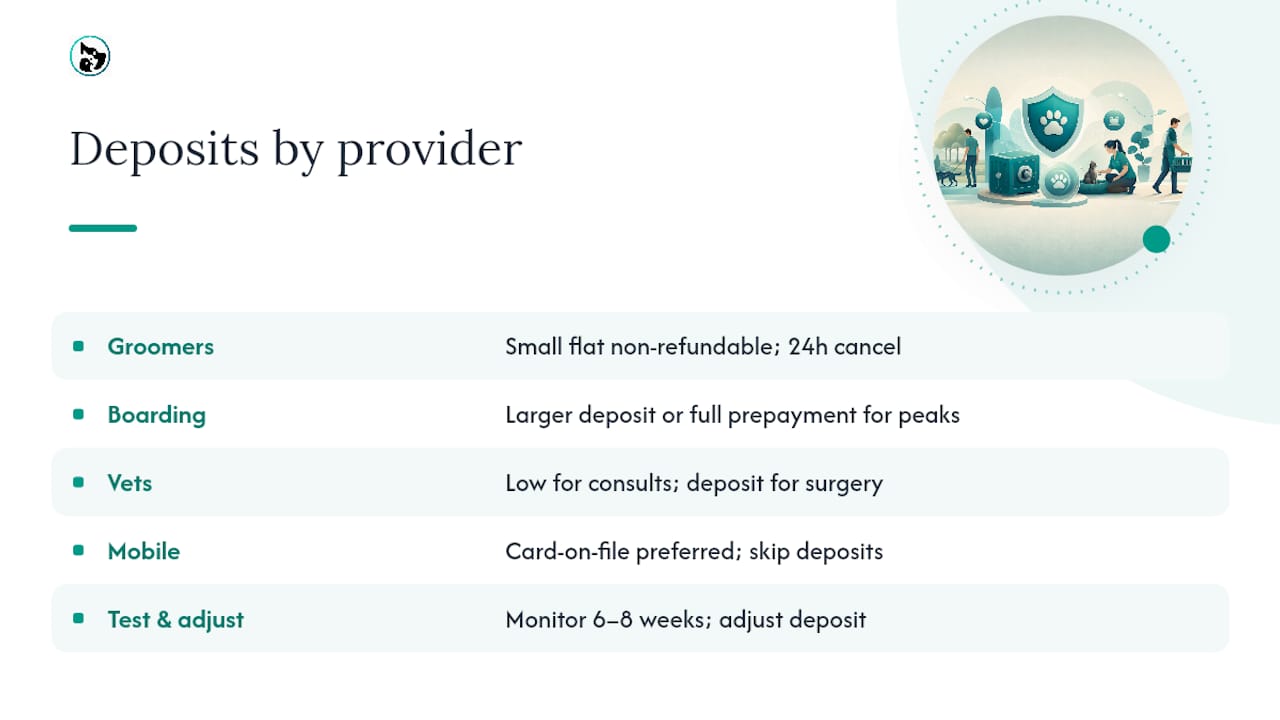
Grooming businesses do best with small, flat, non-refundable deposits paired with a strict 24-hour cancellation window. Boarding facilities need larger deposits or full prepayment for peak periods, because an empty kennel during school holidays is expensive in a way an empty grooming chair on a Tuesday isn't. Veterinary clinics sit somewhere between the two: routine consults barely need a deposit, but procedures and surgeries justify one.
Mobile providers should prioritise card-on-file over deposits every time, since the real cost is the drive, not the missed service. Whatever you land on, treat it as a live experiment. Watch your no-show rate for six to eight weeks after any policy change and adjust the deposit up or down from there.
— AnimalBooking
How Animalbooking handles deposits, card-on-file and automated reminders
Setting a deposit policy is one thing. Making it stick without chasing clients manually is the harder part, and it's where most spreadsheet-and-text-message setups fall apart.
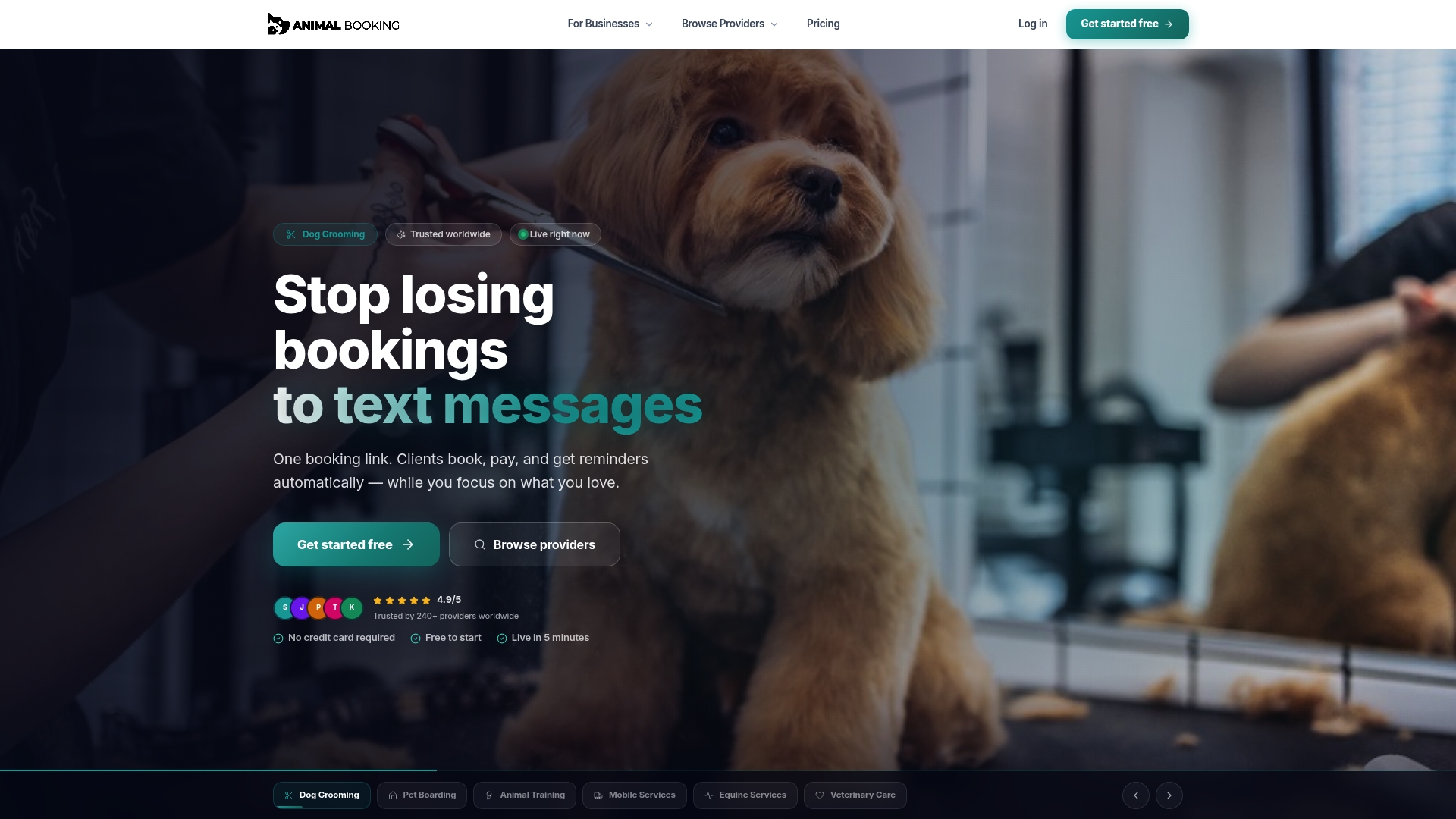
Animalbooking's online booking system shows the deposit amount and cancellation terms directly at checkout, captures the client's explicit agreement, and stores their card for the balance. Reminder sequences run automatically, and the balance charge fires on schedule without anyone at the front desk touching a terminal.
The booking website and automated reminders work together so policy enforcement isn't a manual chase. If you're weighing up deposits vs prepayments for your own business, the fastest way to see which suits your service mix is to set one up and watch what happens to your no-show rate over the next month. Start setting up your booking and deposit rules and go live in minutes rather than days.