
Send a short, warm message within hours, not days, and put a reschedule link right in the text. Assume good faith. Skip fee talk entirely at this stage. If they don't respond, a short sequence over the next few weeks does the heavy lifting: a same-day check-in, a reschedule push a day or two later, then (only if warranted) a policy note, then a light re-engagement message.
TL;DR:
- A well-structured, multi-channel follow-up sequence can recover a significant share of missed appointments, especially with same-day SMS messages.
- Messages should focus on concern rather than blame, escalating gradually from friendly check-ins to policy notices over several days.
- Automatically pausing reminders when a client rebooks prevents over-messaging and maintains trust, which increases rebooking rates.
- Fees must be clearly disclosed at booking, sent via email with documentation, and it is often beneficial to waive first-offence charges to preserve relationships.
- Automating follow-ups with tools like AnimalBooking simplifies the process, reduces manual effort, and enables deposit collection and multi-channel reminders.
Table of Contents
- Why bother with missed appointment follow up at all
- The 4-stage follow-up sequence: timing, channel and posture
- Copy-ready SMS and email scripts for every stage
- Handling cancellation fees without burning the relationship
- Cutting no-shows before they happen
- A provider's case note on switching to automated follow-ups
- How AnimalBooking automates your missed appointment follow up
- Sources
- FAQ
Why bother with missed appointment follow up at all
A missed booking isn't dead revenue. It's a client who got distracted, double booked, or forgot, and a prompt, friendly nudge often wins them back. Structured, multi-channel sequences that start the same day and include a direct reschedule link recover a meaningful share of no-shows compared with sending nothing at all.
The tone matters more than the timing in some ways. A message that opens with concern rather than blame keeps the relationship intact; one that leads with a fee or a scolding line usually kills the rebooking chance outright. If you're managing missed appointments across dozens of clients a week, track one number above all others: your reschedule rate, the percentage of no-shows who rebook within 30 days after a follow-up sequence. That single metric tells you whether your missed appointment follow up process is actually working or just generating noise.
The 4-stage follow-up sequence: timing, channel and posture
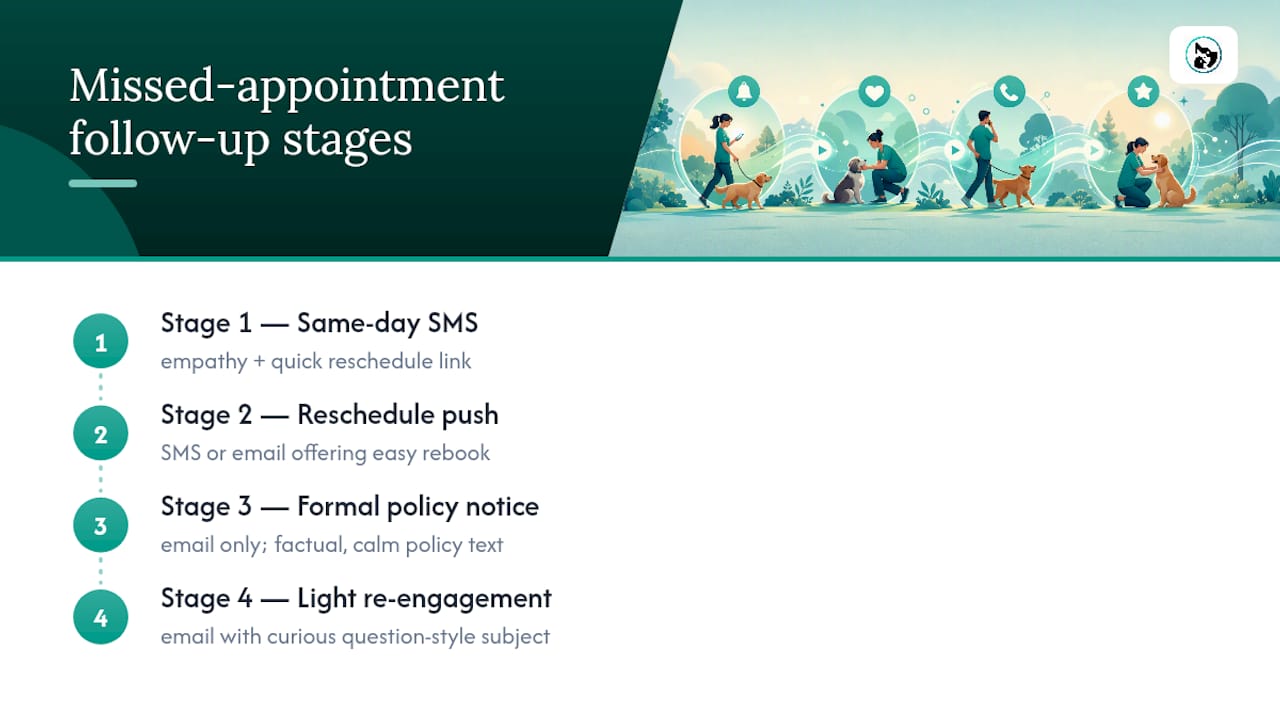
Rescheduling missed appointments works best as a short, escalating sequence rather than one email and a shrug. Each stage has its own timing window, channel, and tone:
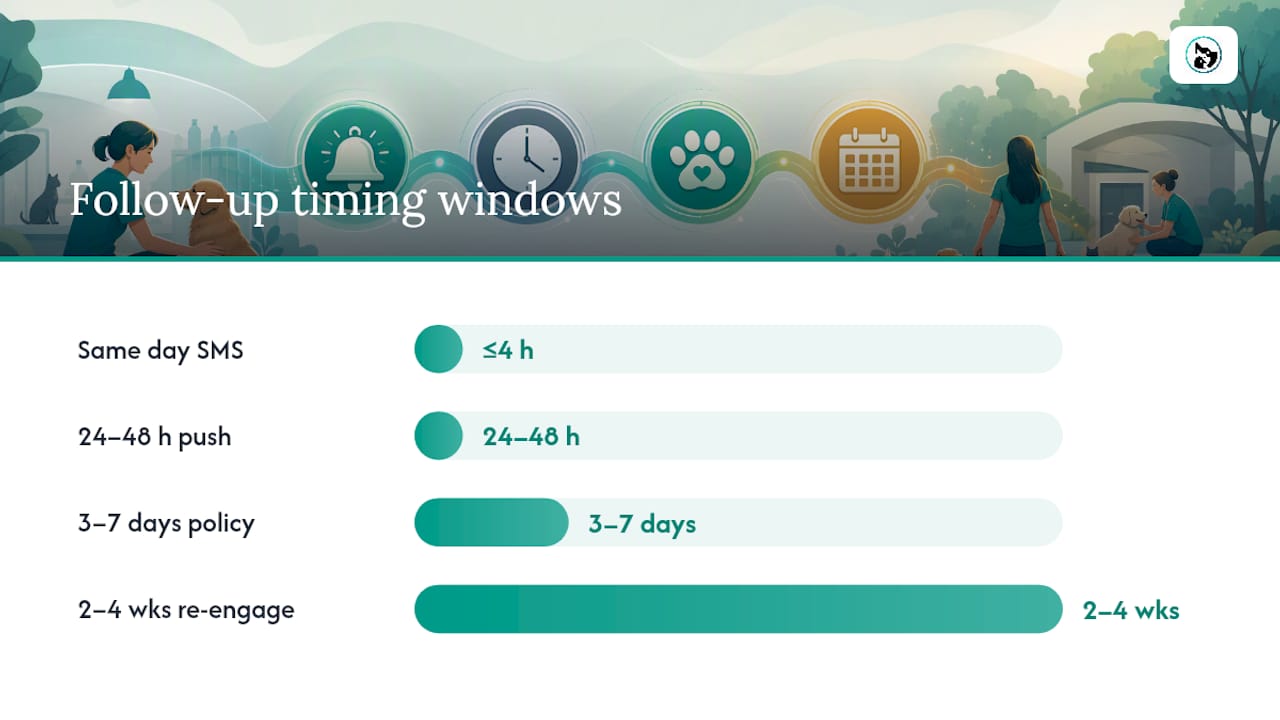
- Same day, ideally within four hours. Send a short SMS. Keep it curious, not accusatory: "Hey [name], noticed we missed you at 2pm today. Everything okay? Here's a link to grab another time." SMS wins here because open rates on text dwarf email for same-day urgency.
- 24 to 48 hours later. If there's no reply, push harder toward action via SMS or email with the booking link front and centre. This is the reschedule push, not a scolding.
- 3 to 7 days out. Only send a policy or fee notice if you disclosed that policy at booking, and only by email, where you can attach documentation.
- 2 to 4 weeks later. If they still haven't rebooked, shift to light re-engagement, a low-pressure nudge or a seasonal offer rather than another reminder about the missed slot.
Pro Tip: Build a pause-on-rebook rule into every sequence. Nothing damages trust faster than a "we miss you" text landing in someone's phone the same afternoon they've already rebooked online.
This staged structure and its subject-line patterns are widely recommended in booking-recovery research, and it mirrors how e-commerce brands treat abandoned checkouts: act fast, remove friction, escalate only when the soft approach fails.
Copy-ready SMS and email scripts for every stage
Templates save you from writing a missed appointment email from scratch every time, and good ones follow a pattern: lead with empathy, offer an easy way back in, and keep any policy language factual and calm rather than punitive.
Same-day SMS (Stage 1): Reschedule push, SMS or email (Stage 2): Formal policy notice, email only (Stage 3): Light re-engagement (Stage 4): Subject lines matter as much as body copy for the email stages. Owner-from names and curious, question-style subjects outperform anything with "missed" or "reminder" in it, which reads as guilt-tripping before the email is even opened. A subject like "Still keen for Thursday?" beats "You missed your appointment" almost every time.
Business type changes the register slightly. A dog groomer can stay casual and use emoji. A vet clinic or equine professional should stay warmer but more formal, closer to the empathetic, policy-neutral wording Hushmail recommends for missed-appointment templates. Trades and mobile pet services sit somewhere in between, direct but not clinical.
Handling cancellation fees without burning the relationship
Fees are a legitimate tool, but they only work when they're fair and expected. Enforce a policy the client never saw at booking and you'll lose them, and possibly get a public complaint over what looks like a surprise charge.
Before sending any fee notice, confirm three things:
- The cancellation or no-show policy was clearly shown at the time of booking, not buried in fine print discovered later.
- The notice goes out by email, never SMS, with the original booking confirmation and policy terms attached as documentation.
- You've considered waiving the fee for a first offence, especially for otherwise reliable clients, and logged the communication either way.
Clinical and practice-management guidance consistently backs professional, patient-centred communication over punitive language, and that holds whether you're running a vet clinic or a dog grooming studio. A factual, documented notice protects you if a dispute comes up later; a guilt-laden one just gives the client a reason to leave a bad review instead of paying the fee.
Cutting no-shows before they happen
Follow-up fixes the damage. The better play is reducing how often you need it in the first place, and that comes down to a handful of operational habits rather than luck.
- Automate your follow-up sequences end to end, and make sure pause-on-rebook logic actually fires the moment a client books again, or you'll spam people who've already fixed the problem themselves.
- Add deposits or prepayments for higher-value or historically flaky bookings; comparing deposits against full prepayments will tell you which friction level your client base tolerates.
- Send confirmations across more than one channel, an email with a calendar invite plus an SMS, then a day-before reminder. WhatsApp reminders work well for clients who ignore email entirely.
- Flag repeat offenders in your system and apply a clear, consistent remediation policy, deposits after the second miss, for instance, rather than an ad hoc decision each time.
A provider's case note on switching to automated follow-ups
A small grooming business we spoke with moved from manual texts to an automated sequence and saw rebookings climb within the first month, mostly from the same-day SMS stage alone. The early mistake was letting the sequence keep messaging clients who'd already rebooked online, which felt tone-deaf and drew a couple of annoyed replies.
The fix was straightforward: turn on pause-on-rebook logic and never lead with a fee. Start with concern, hold the policy language for later, and let the templates do the talking.
— AnimalBooking
How AnimalBooking automates your missed appointment follow up
Animalbooking is the alternative to chasing no-shows by hand with a phone and a spreadsheet. Every plan includes automated reminders across SMS, WhatsApp and email, with pause-on-rebook logic built in so a client who's already rebooked never gets a stray "we miss you" text.
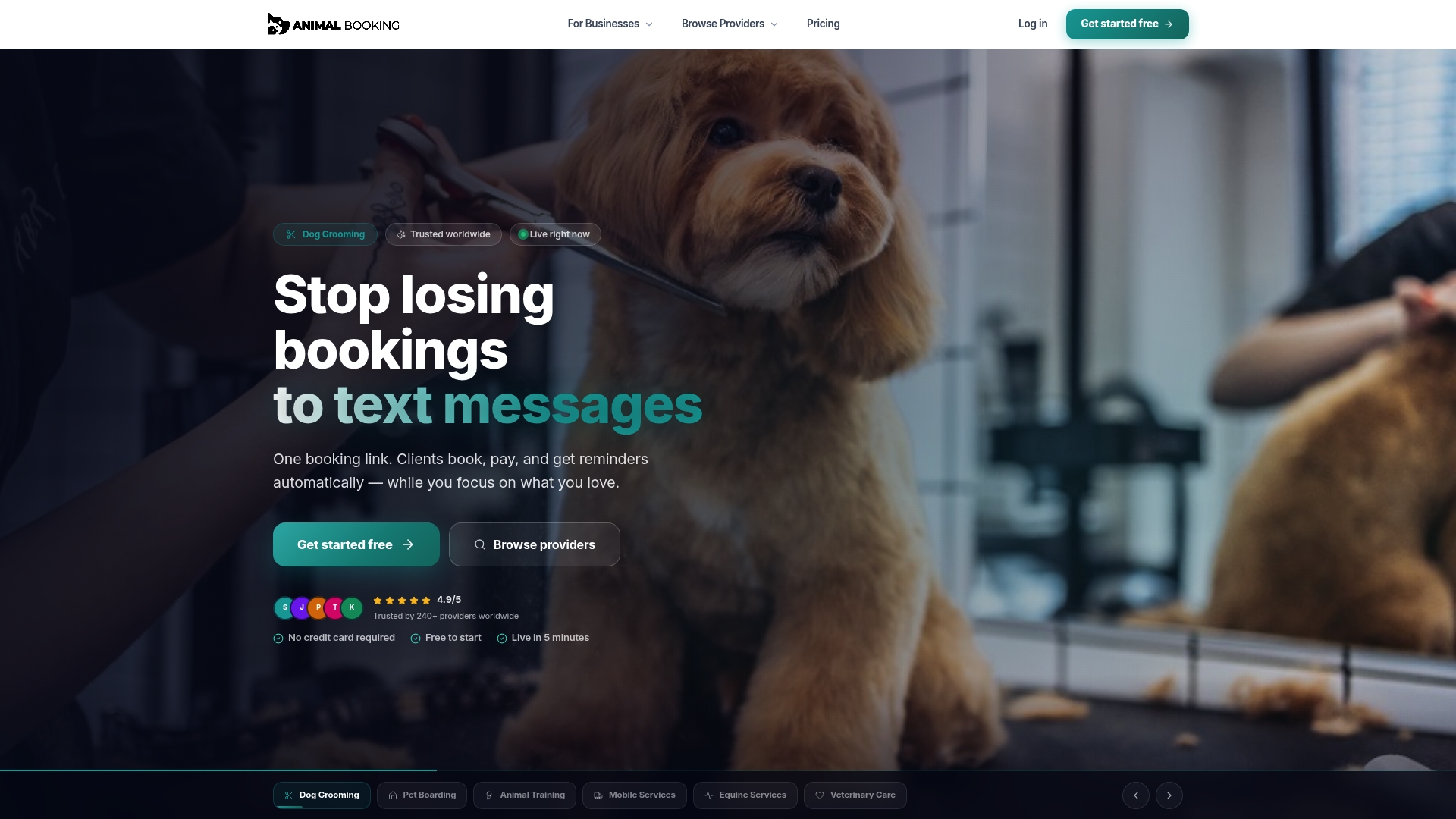
Setup takes minutes, not weeks. You get built-in templates for reminders, a smart calendar that tracks who's missed what, and integrated deposits and payments so you can require prepayment for the clients who need it without building a separate system. If you're weighing up the cost of automating all this against the time you're currently spending typing out reschedule texts by hand, the Independent plan at $49 per month covers a solo groomer or trainer, with Teams and Pro tiers scaling up for multi-staff clinics and boarding facilities. Have a look at Animalbooking's pricing and see which tier matches your booking volume.
Sources
For the staging and subject-line detail behind this playbook, see NoShowCalc's guide to missed appointment follow-up emails and Hushmail's missed appointment templates. For the patient-communication research behind tone recommendations, see the Journal of Family Medicine and Disease Prevention's discussion of missed-appointment follow-up. For retention tactics once a client goes quiet, see Babylovegrowth's guide to customer retention.
- Follow-up email after missed appointment (NoShowCalc)
- Missed appointment follow-up template (Hushmail)
- Clinmedjournals
FAQ
How do you professionally tell a client they missed their appointment?
Lead with concern, not blame: "We had you down for [time] and missed you, hope everything's okay" works far better than "you missed your appointment." Keep the first message short, assume good faith, and put a reschedule link in the same text.
How do you professionally follow up after a missed booking?
Follow up the same day with a warm SMS, then escalate over 24 to 48 hours with a clearer reschedule push if there's no reply. A staged sequence like this, moving from soft to direct, recovers more bookings than a single generic reminder.
What should a follow-up email include after a missed appointment?
A good email opens with empathy, states the missed time plainly, and includes a direct booking link so the client can act in one click. Templates that follow this structure and close with a neutral policy note tend to convert better than blunt reminders.
How do you tell a client about a missed appointment fee?
Send the fee notice by email, never SMS, and only if your cancellation policy was clearly shown at booking. Attach the original confirmation and policy terms as documentation, and consider waiving the fee for a first offence to protect the relationship.
Does AnimalBooking handle missed appointment follow up automatically?
Yes. Animalbooking sends automated reminders across SMS, WhatsApp and email, with pause-on-rebook logic so sequences stop the moment a client rebooks. Current plan pricing, including the Independent, Teams and Pro tiers, is listed on Animalbooking's pricing page.