
The fastest way to run trainer class bookings is a purpose-built scheduling and payments platform like AnimalBooking, not texts and spreadsheets. It handles recurring classes, deposits, automated reminders and payments in one setup that takes minutes, not weeks. The payoff is concrete: faster admin, fewer no-shows, and package tracking that doesn't rely on someone's memory. Read the checklist below, then follow the step-by-step setup to get your first class live.
TL;DR:
- Using purpose-built scheduling platforms can reduce no-shows by up to 80 percent and increase revenue by around 30 percent through automation.
- Setting up a class involves creating the profile, scheduling recurrence, defining prices, assigning staff, and sharing a booking link, all in about 10 to 15 minutes.
- Payment options like deposits, prepayments, and BECS direct debits are essential for cash flow stability, with cancellation terms needing clear visibility at checkout.
- Automated SMS and email reminders, combined with waitlist auto-enrollment and deposits, effectively minimize no-shows and optimize class capacity.
- Trainers must ensure data privacy compliance and restrict access to sensitive information when choosing a booking platform.
Table of Contents
- Must-have features for trainer class bookings
- How do you set up a trainer class in minutes?
- Payments, deposits and recurring billing for classes
- What privacy rules apply to booking data?
- How do you cut no-shows in trainer classes?
- Quick decision checklist before you go live
- Why trainers should ditch texts and spreadsheets
- Get your class bookings running with AnimalBooking
- Sources
- FAQ
Must-have features for trainer class bookings
Not every booking tool is built for a six-week obedience course with a waitlist and a deposit policy. Before you commit to one, check it against how your classes actually run.
- Recurring schedules that auto-generate sessions for an entire course, so you're not manually rebuilding week three.
- Capacity limits with waitlist auto-enrol, so a cancelled spot fills itself instead of sitting empty.
- Package sales and redemption tracking, so a five-session puppy pack deducts automatically each week.
- Deposit or full-prepayment options, with cancellation rules you set once and apply consistently.
- Automated SMS and email reminders, plus calendar invites, so owners don't forget week four.
- Custom intake forms that capture dog breed, age, vaccination status and behavioural notes at sign-up.
- Embeddable booking pages, payment links and QR codes for your website, Instagram bio or a flyer at the park.
- Staff assignment and attendance reporting, useful the moment you hire a second trainer.
An Australian vendor benchmark in this space shows prepaid session packages with automatic redemption are now a baseline expectation for trainers running multi-week courses, not a premium extra.
How do you set up a trainer class in minutes?
Setting up your first class is mostly a matter of sequence. Get these steps in order and you can be taking bookings before your coffee goes cold.
- Create the class profile. Name it, set the skill level, and build your intake fields (dog's name, breed, age, health notes, vaccination status).
- Set the recurring schedule. Choose the day, time and number of weeks, then set capacity and waitlist rules.
- Define pricing. Decide between a single-session rate, a course package, or a deposit against the full fee, and set your cancellation cut-off (24 or 48 hours before class is common).
- Assign staff and switch on reminders. Link the class to the trainer running it and enable automated SMS and email reminders.
- Publish the booking page. Share the link on your website, social bio, or as a printed QR code at your venue.
- Run a test booking. Book a dummy session yourself, process a test payment, then open the class for real enrolments.
The whole process, from blank screen to a published, payable booking page, typically takes 10 to 15 minutes once you've got your class details ready.
Pro Tip: Run your test booking with a real card in a small amount, then refund it. That confirms your payment processor, confirmation emails and calendar invites all fire correctly before a paying client hits the same flow.
Payments, deposits and recurring billing for classes
Deposits and full prepayment solve different problems. A deposit lowers the barrier to booking but leaves a balance to chase later. Full prepayment locks in revenue immediately but can put off a first-time client who wants to try one session before committing to six.

For one-off casual classes, card payments make sense. For an ongoing membership-style program, BECS direct debit is Australia's standard for recurring bank-to-bank debits, and it tends to fail less often than a card that's expired or been cancelled. It does require a signed Direct Debit Request and a process for handling returns and retries, so it suits businesses with steady, predictable weekly classes more than casual drop-ins.
Payment Links or a hosted checkout page speed things up further, letting you share a payable link via text or QR code and store a card for future sessions without re-entering details each week.
- Deposit: lower commitment barrier, chase remainder later.
- Full prepayment: locks in revenue, may deter trial bookings.
- BECS: predictable cash flow for recurring classes, needs a mandate.
- Card via payment link: fastest for one-off or casual sessions.
Whichever mix you choose, ACCC guidance is clear that cancellation and refund terms must be visible and unambiguous at the point of checkout, not buried in a PDF nobody reads.
What privacy rules apply to booking data?
You, the trainer, remain responsible under the Australian Privacy Principles for any personal information your booking tool collects, even though the software handles the storage. That includes owner contact details and dog health notes gathered through intake forms.
Before signing up to any platform, check a few things:
- Where is client data hosted, and does the vendor run regular security testing?
- Does the privacy policy explain what's collected and why, in plain language?
- If the platform uses automated decision-making (like AI-assisted scheduling), does it disclose that to clients?
- Can you restrict staff access to sensitive fields like health notes?
Keep intake forms to what you actually need. Every extra field is another piece of data you're accountable for.
How do you cut no-shows in trainer classes?
No-shows cost more than the missed fee. They waste a slot someone else on the waitlist would have taken. A reminder sent 48 hours out and another 2 hours before class, by SMS and email, catches most people who'd otherwise forget.
- Send layered reminders (48 hours, then 2 hours before class).
- Take a deposit or partial prepayment on booking to increase commitment.
- Sell multi-week packages up front so each session auto-enrols without a fresh decision each time.
- Turn on waitlist auto-enrol so a late cancellation gets rebooked, not wasted.
AnimalBooking's own data shows this combination can reduce no-shows by up to 80% and lift revenue by roughly 30% per booking, largely by removing the manual follow-up trainers used to do by text.
Pro Tip: Pair your deposit policy with your cancellation cut-off. If cancellations inside 24 hours forfeit the deposit, say so at checkout, not after the fact.
Quick decision checklist before you go live
- Match features to your class model: capacity limits, packages, mobile versus fixed venue.
- Confirm your payment types and write your cancellation policy in plain language.
- Run one test booking and one test refund before opening real enrolments.
- Publish your booking link and switch on your reminder cadence.
Why trainers should ditch texts and spreadsheets
The time trainers lose isn't the booking itself, it's the follow-up: chasing payment, retyping a waitlist, forgetting who's owed a make-up session. The biggest mistake we see is skipping intake forms and manually tracking package redemptions.
— AnimalBooking
Get your class bookings running with AnimalBooking
AnimalBooking is built specifically for pet service providers, including dog trainers and obedience schools, who are still juggling class rosters by text message. The platform's own figures show it can reduce no-shows by up to 80% and lift revenue by around 30% per booking, largely because reminders, deposits and package tracking run automatically instead of relying on you remembering to chase someone.
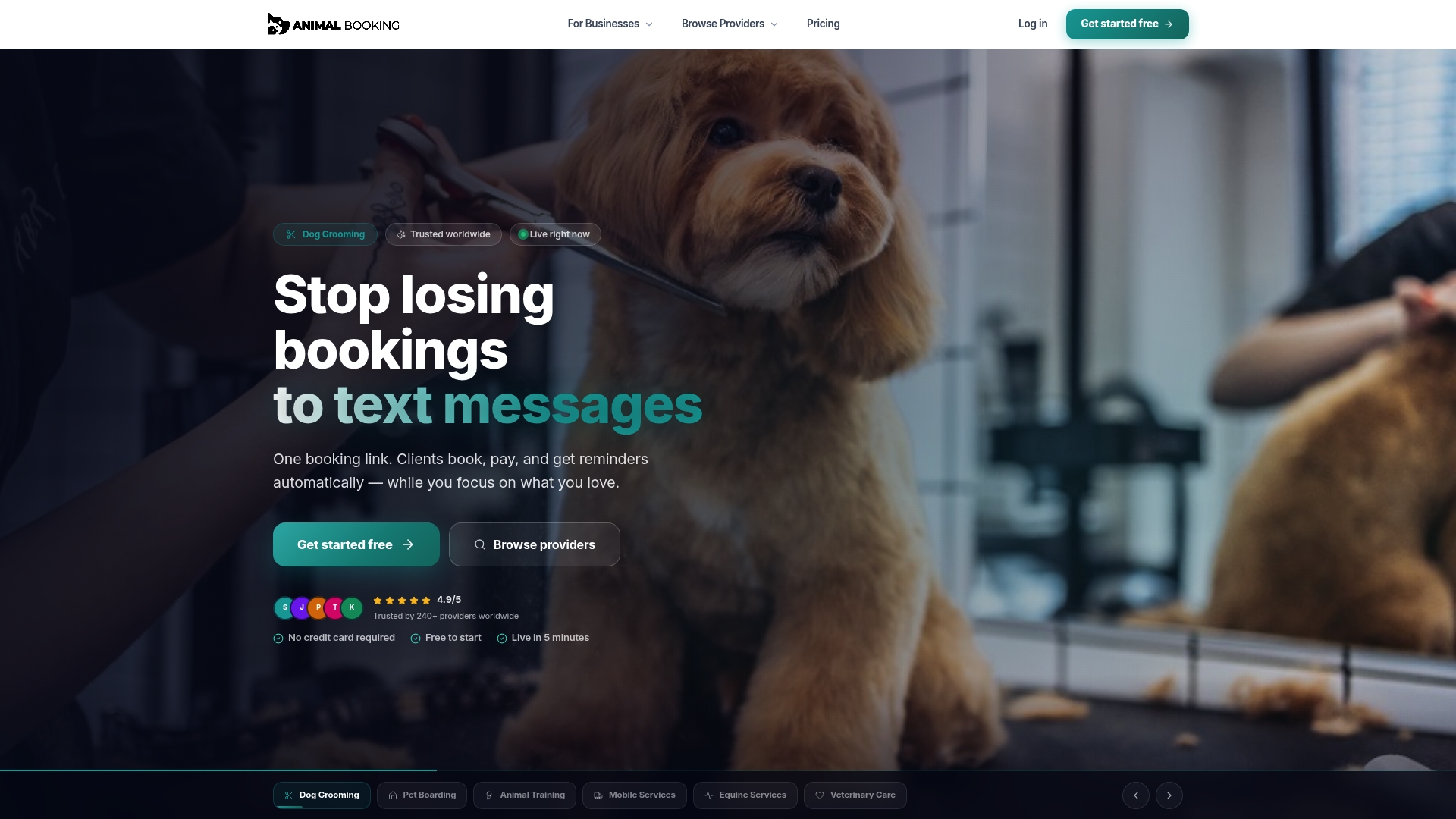
Setup takes minutes, not days. You create your class, set your recurring schedule, connect payments, and publish a booking page you can share on your website or as a QR code at your venue, replacing the group text thread entirely. Plans range from a free Starter tier through to Independent, Teams and Pro, with platform fees scaling down as your booking volume grows, so a small obedience school and a multi-trainer operation both fit somewhere on the pricing page. If you're setting reminders and payment consents up for the first time, a marketing automation checklist is a useful companion for getting consent language right.
Visit the pricing page, pick a plan that matches your class size, and run one test booking today.
Sources
- Chapter 1: APP 1 Open and transparent management of personal information | OAIC
- Contracts | ACCC
- Payment links | Stripe
FAQ
What's the difference between a deposit and a prepayment for classes?
A deposit is a partial payment that secures the booking while the remainder is paid later, which lowers the barrier for new clients trying your class. Full prepayment collects the whole fee upfront, locking in revenue but sometimes deterring a first-timer, as explained in AnimalBooking's guide to deposits versus prepayments.
How much does AnimalBooking cost for a trainer business?
AnimalBooking's Independent plan is $49 per month, Teams is $149 per month, and Pro is $299 per month, alongside a Starter tier with no published price. Platform fees on payments processed range from 1% to 3% depending on your plan.
Is BECS or card payment better for recurring classes?
BECS direct debit suits ongoing weekly classes because it tends to fail less often than expired cards, though it needs a signed Direct Debit Request. Card payments via a payment link work better for one-off or casual sessions where speed matters more than long-term predictability.
Do I need a written cancellation policy for classes?
Yes. The ACCC expects cancellation and refund terms to be clear and visible at checkout, not hidden in fine print, to avoid disputes and potential enforcement issues.
What privacy steps should I take before choosing a booking tool?
Check where the vendor hosts data, whether the privacy policy is plain and current, and whether staff access to sensitive fields like health notes is restricted. You remain responsible for that data under the Australian Privacy Principles regardless of which platform you use.