

Here's a sentence you can use today: "Cancellations made within 24 hours of your appointment incur a cancellation fee of half the service cost. No-shows are charged the full amount." Swap the numbers to fit your business, but keep the structure. It needs to sit where clients see it before they book, and they need to actively agree to it, not just scroll past it.
TL;DR:
- Clear notice of the cancellation fee at booking, with specific thresholds, fees, and accepted methods, prevents disputes about vague or hidden policies.
- An explicit acceptance step, such as a timestamped checkbox or signature, is essential for enforceability under Australian Consumer Law.
- Fees should be proportional and clearly defined as a percentage or fixed amount, avoiding vague language or punitive pricing.
- Placing the policy within the booking flow and sending reminders with the same wording minimizes last-minute cancellations and legal risks.
- Automation tools like SMS or email reminders and deposit pre-authorizations help verify compliance and reduce disputes without solely relying on wording.
Table of Contents
- What makes late cancellation wording actually enforceable?
- The exact elements every late cancellation clause should state
- Copy-paste cancellation policy templates for common scenarios
- How to choose the right window and fee for your business
- Where and how to put your cancellation policy into practice
- What actually happens when the wording is clear
- The gap between a "policy" and wording that holds up
- Reduce late cancellations before the wording even has to work
- Sources
What makes late cancellation wording actually enforceable?
Most disputes over cancellation fees don't happen because the fee was unreasonable. They happen because the wording never gave the customer clear notice, or the phrase used was too vague to mean anything in a stoush. "Reasonable notice" and "cancellations may incur a fee" are the two phrases that cause the most grief, because neither one tells a customer what to actually do.
Under Australian Consumer Law, a business can charge a cancellation fee, but the fee has to be disclosed clearly before the customer commits, and it has to be proportionate to the loss you've actually suffered, not a punitive number designed to sting. A cancellation policy needs to state precise notice periods, fee options and how a cancellation must be submitted to stand up if a customer pushes back.
Three things make wording enforceable in practice:
- Clear notice at the point of agreement. The policy has to be visible during booking, not buried in a PDF nobody opens.
- An acceptance step. A tickbox, a signature, or a recorded "yes" against the policy at booking time, with a timestamp attached.
- Proportionate fees. The amount has to relate to a genuine cost. Staff wages for the slot, materials prepped, or the revenue you couldn't recover by rebooking.
Specific language such as "50% of the booked service if cancelled within 24 hours" is far more enforceable than vague phrasing, and it's also easier to defend if a customer disputes the charge on their card statement.
Avoid blanket "no refunds" statements. That phrase alone can conflict with consumer guarantees under the ACL, particularly if the service itself wasn't delivered as promised. Frame the fee as cost recovery instead: what it covers, not what it punishes.
Pro Tip: Keep a simple record of when the policy was shown, when it was accepted, and when the reminder SMS or email went out. If a customer disputes a fee, that timestamp trail does more work than any clever wording ever will.
One more thing worth flagging: a policy that isn't shown until after the booking is confirmed carries almost no legal weight. If the client never saw it, or never agreed to it, you're relying on goodwill, not a clause.
The exact elements every late cancellation clause should state
A cancellation clause that actually works isn't clever. It's complete. Miss one of these elements and you're leaving room for an argument.
- The late threshold. State the exact cutoff, not a fuzzy window. "Within 24 hours of your scheduled appointment" beats "shortly before your appointment" every time.
- The fee amount or formula. Pick a flat dollar figure, a percentage of the service cost, or full deposit forfeiture, and write it as a number, not a range you'll interpret later.
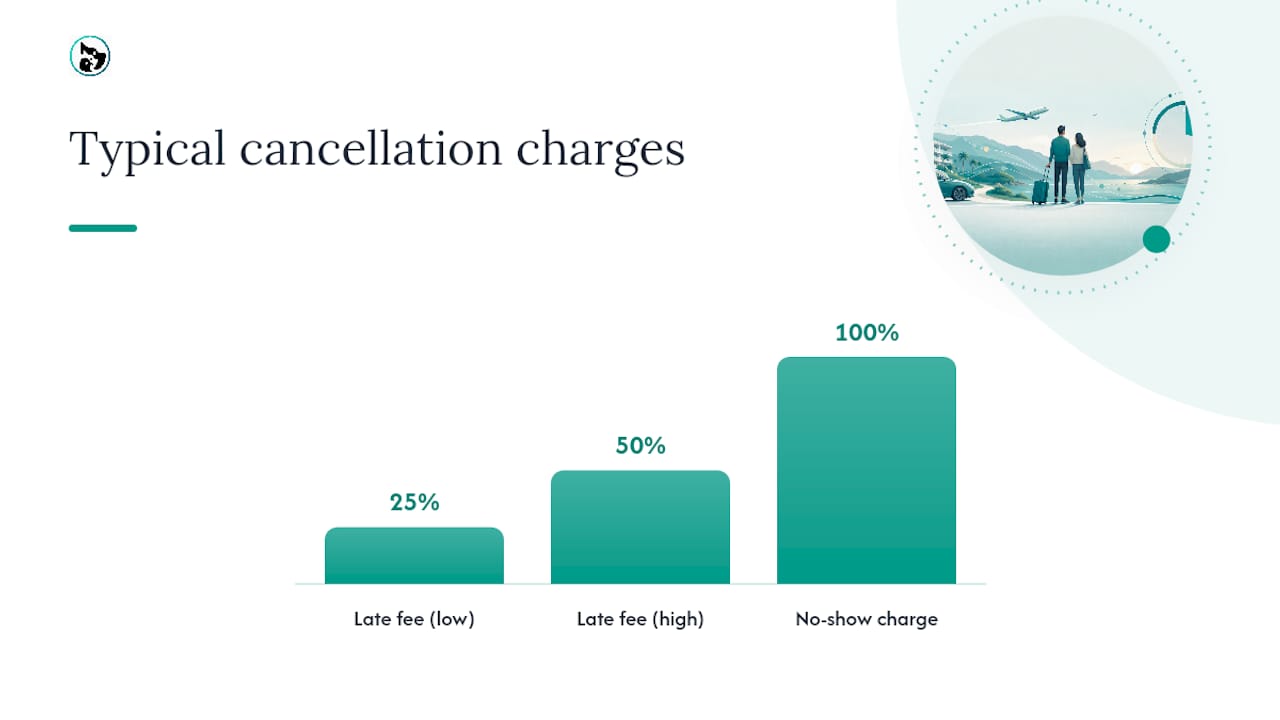
- The no-show charge. State separately what happens if the customer simply doesn't turn up. This is usually higher than a late cancellation fee, often 100% of the booking value.
- Acceptable cancellation methods. Name the channels you'll actually accept: phone, email, the online booking portal, an app message. A policy that names specific channels and requires confirmation reduces disputes about whether notice was actually given.
- Late arrival rules. Define how many minutes late counts as a no-show. A threshold around a quarter of an hour is commonly used, but it should be clearly stated since interpretations vary among clients.
- Exceptions and discretion. A short clause covering medical emergencies or genuine unforeseen circumstances, with the final call left at your discretion, keeps the policy fair without opening a loophole.
- Deposit handling. State whether a deposit is refundable, forfeited, or applied to the final invoice, and note that fees may be deducted automatically from a held deposit or pre-authorised payment rather than chased separately.
Common industry practice sits around a 24 to 48 hour notice window, with fees of 25 to 50% for late cancellations and 100% for no-shows on higher-impact bookings like consultations, grooming slots, or group sessions where rebooking is unlikely.
Pro Tip: Write the fee as a formula, not a story. "We may charge a fee depending on the circumstances" gives you nothing to point to later.
Copy-paste cancellation policy templates for common scenarios
These are starting points. Swap the brackets, keep the structure, and match the fee to what your business can genuinely justify.
Simple, low-friction template (good for casual bookings, first-time clients, low-cost services):
This works for businesses where the cost of a missed slot is modest and you'd rather keep the relationship friendly than fight over small change.
Tiered time-based template (better for higher-value appointments):
Tiering rewards early notice and punishes last-minute bailouts proportionally, which is exactly the kind of graduated response that holds up if challenged.
Deposit and prepayment template:
State plainly whether the deposit is forfeited outright or simply applied toward the fee, because those are two different outcomes and customers will assume the friendlier one unless you spell it out.
No-show template:
The repeat-offender clause matters more than most businesses realise. It gives you a graduated response instead of an awkward all-or-nothing decision about whether to keep serving someone who keeps ghosting you.
Industry-specific tweaks:
- Therapists and health providers: "Cancellations within 24 hours of your session are charged at 50% of the session fee, reflecting the reserved clinical time. Genuine medical emergencies are assessed case by case."
- Beauty and grooming: "Late cancellations made within half a day may result in loss of the deposit. No-shows may be charged the full service price and could face prepayment requirements for future appointments."
- Mobile pet services: "Cancellations within 24 hours of a scheduled home visit incur a callout fee of [$30], reflecting travel time already committed."
- Group bookings and events: "Cancellations involving groups typically require several days' notice. Late cancellations may result in forfeiture of the full group deposit, given the difficulty of rebooking multiple slots on short notice."
How to choose the right window and fee for your business
The right notice window isn't a guess. It's tied to one question: how long does it realistically take you to fill that slot again?
If you can usually rebook a cancelled appointment within a couple of hours, a shorter 12 to 24 hour window is fair. If a cancelled slot almost never fills again on short notice, whether that's a specialist consultation, a group class, or a mobile visit with travel time baked in, a 48 hour window and a higher fee are justified.
- Salons and grooming: short windows (12 to 24 hours) work because walk-in demand often fills the gap.
- Therapists and specialist consultations: longer windows (24 to 48 hours) suit low walk-in demand and prep time.
- Mobile pet services: factor in travel already committed, not just the service time.
- Group bookings: longer windows again (48 to 72 hours), since rebooking several people at once on short notice is close to impossible.
Flat fees suit simple, low-cost services where the maths is easy to explain. Percentages suit higher-value bookings where a flat number either overcharges cheap services or undercharges expensive ones. Deposit retention works well when you already collect deposits, because it removes the awkward step of chasing a separate charge.
One behavioural tweak worth adding: a one-time grace waiver for a client's first late cancellation softens the sting without weakening the policy, and it reads as goodwill rather than a loophole.
Where and how to put your cancellation policy into practice
Wording only works if the customer actually sees it and agrees to it. Where you place it matters as much as what it says.
- Show it in the booking flow itself, not on a separate terms page nobody clicks. The moment someone selects a time slot is the moment they need to see the fee structure.
- Require explicit acceptance. A tickbox linked to the full policy, timestamped at the moment of booking, gives you something concrete if a fee is ever disputed.
- Repeat it in the confirmation email or SMS. Showing the policy during booking, in confirmations, and via reminders reduces last-minute cancellations and makes fees easier to justify later.
- Use reminders and deposits together. A reminder 24 to 48 hours out, paired with a held deposit or pre-authorised payment, catches most cancellations before they become no-shows.
- Give staff a short script. Something like: "Just so you know, cancellations within 24 hours carry a 50% fee, that's in our booking confirmation too." Said once, calmly, it heads off most arguments.
- Keep records. Booking timestamps, confirmation timestamps, and reminder logs should be kept for at least 12 months to back up any disputed charge.
Pro Tip: Don't rely on memory or a paper diary for this. The businesses that win disputes are the ones who can produce a timestamp, not the ones who remember the conversation.
What actually happens when the wording is clear
Vague cancellation policies create more arguments than firm ones.
Most customers accept a fee without complaint when it's presented plainly, before they book, with a number attached. What they push back on is being surprised by a charge they never agreed to.
Clear wording paired with automated reminders and deposits tends to cut disputes sharply, not because the software argues for you, but because there's a timestamp trail behind every step. The wording sets the expectation. The automation proves it was communicated.
The gap between a "policy" and wording that holds up
Most small businesses already have a cancellation policy. Almost none of them have wording that would survive a genuine dispute, and that gap is where the real damage happens.
The conventional advice, tucked into a terms page with phrases like "reasonable notice" and "may incur a fee," feels responsible but does nothing. It's the wording equivalent of a lock with no key. What actually protects revenue is boring specificity: a number, a time window, a named method for cancelling, and proof the customer saw it.
If you take one thing from this, prioritise the acceptance step before you worry about the perfect fee percentage. A modest 25% fee with a timestamped tickbox beats a punitive 100% fee nobody agreed to. Get the agreement right first. The number is the easy part.
— AnimalBooking
Reduce late cancellations before the wording even has to work
Good wording stops most arguments after the fact. Automation stops a chunk of the cancellations before they happen at all, and that's the part a written policy alone can't do.
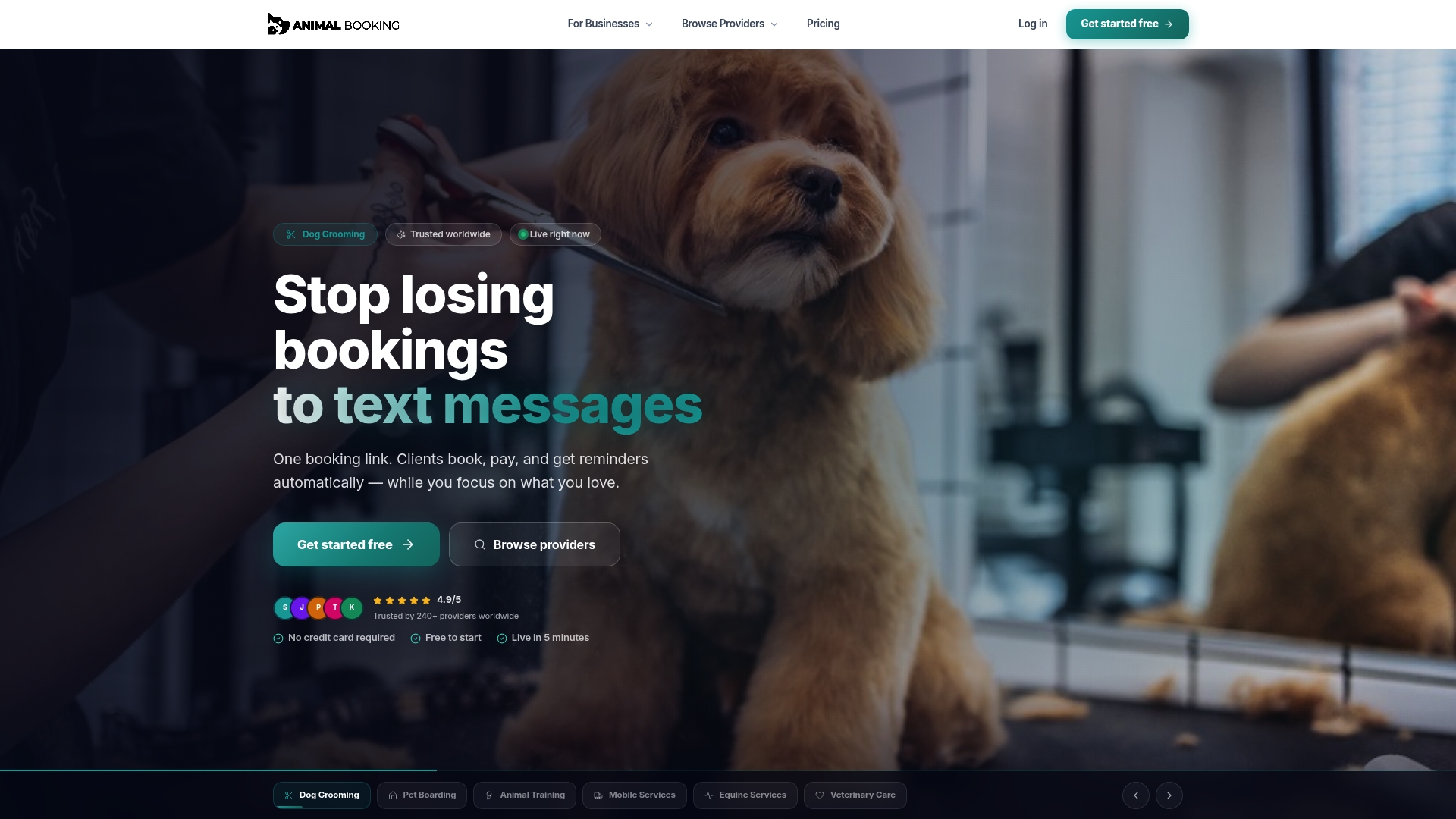
Animalbooking's auto reminders send scheduled SMS and email nudges before every booking, which catches the client who simply forgot rather than the one who's genuinely cancelling. Its payments feature lets you hold a deposit or pre-authorise a card, so the fee you've written into your policy actually gets collected instead of chased. And every booking confirmation can carry your exact cancellation wording, timestamped the moment a client books, giving you the evidence trail this article has been talking about the whole way through.
None of that replaces having the wording right in the first place. Software reduces the friction and the missing evidence, but a fair, specific clause is still what makes a fee stick. If you run a grooming business, a mobile pet service, or a vet practice and want reminders, deposits, and policy visibility working together, you might consider booking a free consultation to get bespoke advice tailored to your business needs at PurpleLalu.
Sources
- Cancellation policy template & examples: clear wording for Australian businesses
- 12 cancellation policy templates to reduce no-shows
- Cancellation policy (Lawpath)
- How to write a professional cancellation policy: templates & examples